Your cart is currently empty...
but it doesn't have to be!
We Think You'll Love This


In This Article:
- Everything You Need to Know to Go from Curious Beginner to Confident Card Reader
- So... What Exactly Is Tarot?
- Why Tarot Is Having Its Moment Right Now
- The Surprising History of Tarot
- Understanding Different Tarot Systems
- Breaking Down the Tarot Deck (It's Simpler Than You Think)
- The 22 Major Arcana Cards (and What They Mean)
- The Four Suits: What Area of Your Life Do They Cover
- Understanding the Numbers in Each Suit
- The Court Cards: People and Personalities
- How to Actually Do a Tarot Reading (Step by Step)
- 8 Tips to Actually Get Good at Reading Tarot
- You're Ready to Start Your Tarot Journey
 Everything You Need to Know to Go from Curious Beginner to Confident Card Reader
Maybe you’ve even had a reading before. From a friend, an online reader, or one of those TikTok or Instagram videos that stopped your scroll because it just hit.
And now you’re wondering: What exactly is tarot? How does it work? And could I actually learn to read these cards myself?
The answer is: absolutely.
Think of tarot as your intuition’s best friend, a mirror that helps you hear the voice within, the one that already knows what’s right for you but sometimes gets drowned out by overthinking or outside noise.
Whether you want to pull a card for yourself each morning, finally understand the readings you see online, or just explore what the magic is all about, this guide will walk you through it. Simply and clearly.
So... What Exactly Is Tarot?
Let's start with the basics.
Tarot is a deck of 78 cards used for gaining insight, clarity, and guidance on pretty much any area of your life: love, career, finances, personal growth, life decisions, you name it.
Each card has its own imagery, symbolism, and meaning. When you do a tarot reading, you shuffle the deck while thinking about your question, pull cards, and interpret what they're telling you based on their meaning and position.
Here's what tarot is: a mirror for your subconscious mind. A tool that helps you access your own inner wisdom and intuition. A way to gain perspective on situations when you're feeling confused or stuck.
Think of it like this: when you're too close to a situation, it's hard to see it clearly. Tarot helps you step back and look at things from a different angle, often revealing insights you already knew deep down but couldn't quite access.
That's why so many people are obsessed with it right now. In a world full of noise and confusion, tarot offers clarity.
Why Tarot Is Having Its Moment Right Now
 If you're on social media, you've definitely noticed: tarot is everywhere.
TikTok has millions of tarot videos. Instagram is full of readers offering guidance. YouTube tarot channels have millions of subscribers doing weekly readings for each zodiac sign.
So what's behind this massive resurgence?
People are craving guidance and clarity. Life feels uncertain right now, and tarot offers a way to tap into your intuition and get answers when everything feels confusing.
It's accessible. You don't need to be "gifted" or have years of training. You can literally buy a deck and start learning today. Plus, there are thousands of free resources online.
It's deeply personal. Unlike generic advice, tarot speaks directly to YOUR specific situation. Every reading is unique to what you're going through.
It's empowering. Tarot doesn't tell you what to do—it helps YOU figure out what YOU already know. It puts the power back in your hands.
The aesthetics are gorgeous. Let's be real—tarot decks are beautiful, and the whole practice feels magical and intentional in a world that often feels chaotic.
Whether you're using it for major life decisions or just daily guidance, tarot has become the go-to tool for intuitive self-discovery.
The Surprising History of Tarot
Here's something most people don't know: tarot cards weren't originally created for readings at all.
They actually started as a card game in 15th-century Italy, called "tarocchi." Wealthy families would commission these beautifully hand-painted decks to play a game similar to bridge.
It wasn't until the late 1700s that people in France started using tarot for divination. A French occultist named Antoine Court de Gébelin published essays claiming tarot held ancient Egyptian secrets and mystical wisdom.
Was there any evidence for this? Nope. But people loved the idea, and tarot quickly became associated with spirituality and fortune-telling.
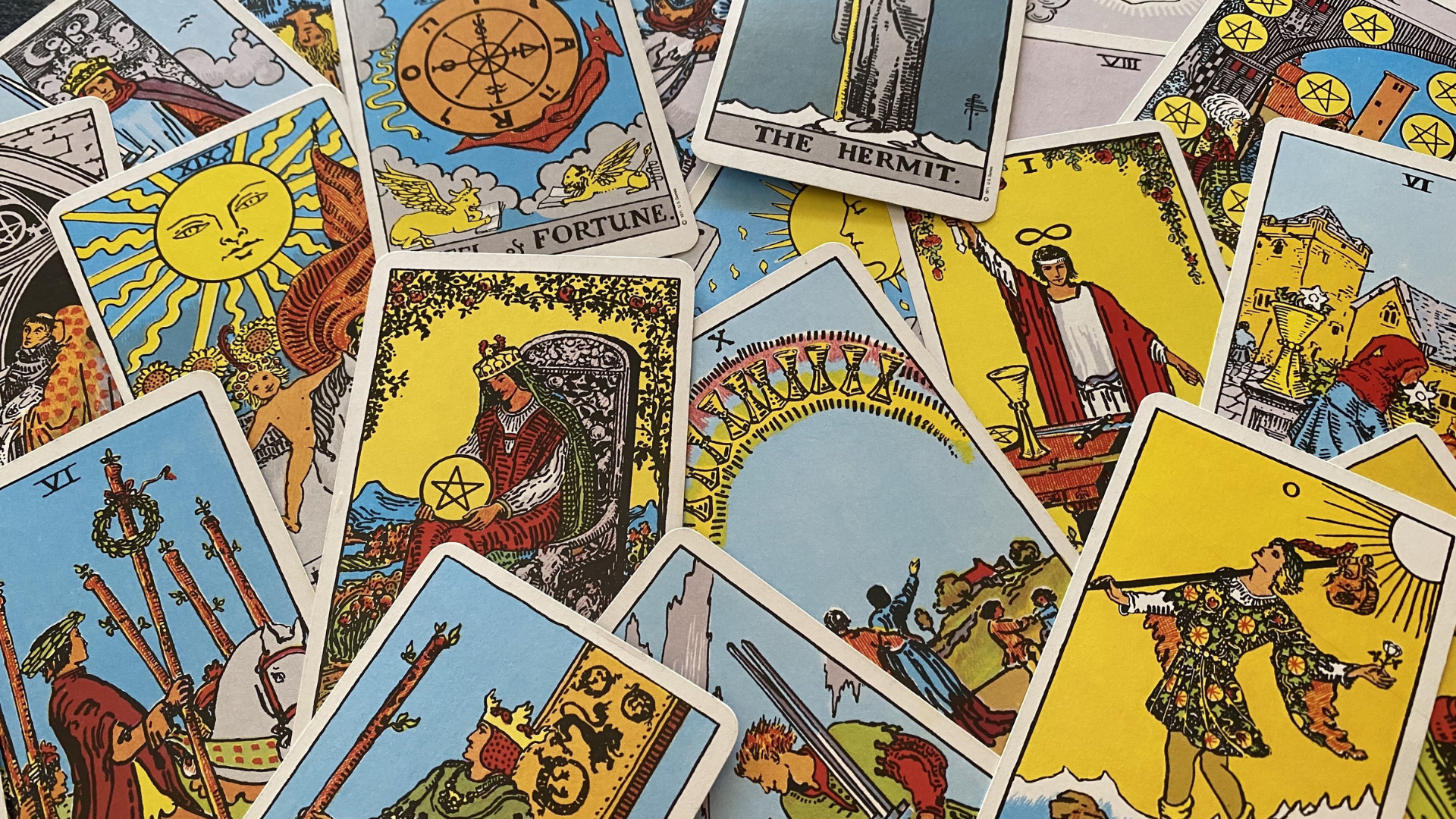
By the early 1900s, tarot had evolved from a card game into a spiritual practice. That’s when the Rider–Waite–Smith deck was born, the version that introduced the illustrated Minor Arcana and inspired most modern tarot decks used today.
From there, tarot spread worldwide, adapting to new cultures and creative interpretations while keeping its same symbolic roots.
Pretty wild how a deck of cards meant for play became one of the most beloved spiritual tools, right?
Understanding Different Tarot Systems
Before we dive deeper, it’s helpful to know that not all tarot decks look exactly alike.
Over the centuries, several main systems have developed — the Rider–Waite–Smith, Thoth, and Tarot de Marseille among them — each with its own artistic style and symbolic approach.
This guide focuses on the Rider–Waite–Smith system, since it’s the most widely used and easiest for beginners to learn. But don’t worry, most decks, no matter their artwork, still follow the same 78-card structure and general meanings.
Once you understand the basics here, you’ll have the foundation to explore any tarot deck with confidence.
Breaking Down the Tarot Deck (It's Simpler Than You Think)
When you first look at a tarot deck, it can feel overwhelming. Seventy-eight cards, each with its own imagery and meaning?
Here’s the good news: there’s a clear structure behind it all. Once you understand how the deck is organized, everything starts to make sense.
Most traditional decks follow the same structure:
The Major Arcana (22 cards) - The big life themes, soul lessons, and major turning points
The Minor Arcana (56 cards) - The everyday situations, decisions, and experiences
Let's break each one down.
The Major Arcana: When Big Shifts Are Happening
The Major Arcana is made up of 22 cards, numbered 0 through 21. These are the cards that appear when something significant is happening in your life. Think career changes, relationship transformations, spiritual awakenings, or major decisions.
When you see a lot of Major Arcana cards in a reading, the universe is basically saying: “This is important. Pay attention. You’re in a period of major growth.”
Each Major Arcana card represents a universal experience or spiritual lesson we all encounter on our personal journey, from new beginnings to inner transformation and ultimate fulfillment.

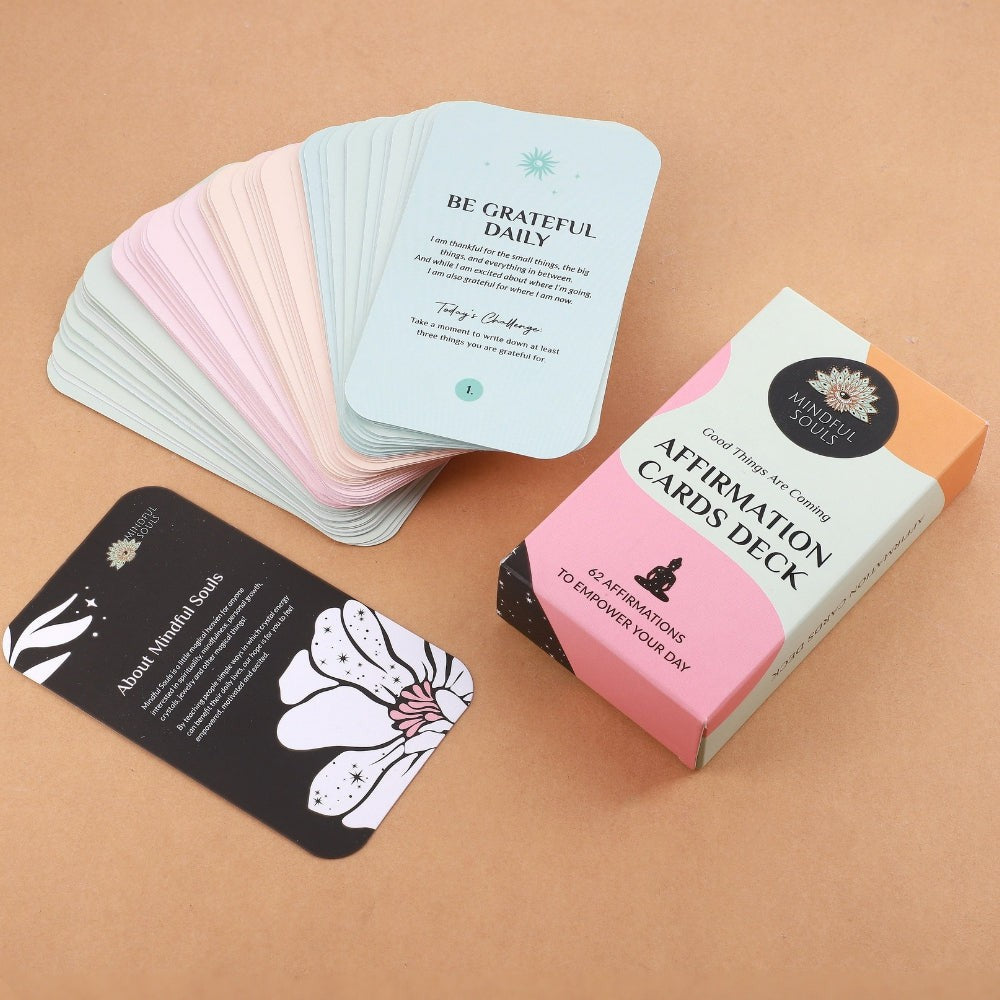
A Guide To Make Better Choices For Yourself Everything you need to know about Tarot reading, wrapped up in one beautiful deck. Unlock the magic of positivity with the 'Good Things Are Coming' Affirmation Cards. Shift your mindset, replace doubts with confidence, and embrace each day with empowering energy! Find the Direction You Need, Every Single Day Life doesn’t come with a manual, but these cards come close. Crystals, tarot, and affirmations meet to bring clarity and calm to your life. Discover the transformative power of tarot with our Digital Tarot Journal. This intuitive journal helps you track your readings, deepen your practice, and unlock your inner wisdom, all at your fingertips.
Tarot Card Deck
Affirmation Cards Deck
Mindful Cards Bundle: Tarot, Crystals & Affirmation Card Decks
Printable Tarot Journal - Draws, Spreads & more


 The 22 Major Arcana Cards (and What They Mean)
0 – The Fool → New beginnings, curiosity, taking a leap of faith, embracing the unknown
I – The Magician → Manifestation, using your skills and resources, stepping into your power
II – The High Priestess → Intuition, mystery, listening to your inner voice, hidden knowledge
III – The Empress → Nurturing, abundance, creativity, fertility, growth
IV – The Emperor → Structure, leadership, discipline, stability, authority
V – The Hierophant → Tradition, spiritual guidance, learning, community, beliefs
VI – The Lovers → Relationships, choices, alignment, harmony between heart and mind
VII – The Chariot → Determination, willpower, taking control, forward movement
VIII – Strength → Inner strength, courage, patience, compassion over force
IX – The Hermit → Introspection, solitude, inner wisdom, seeking truth
X – Wheel of Fortune → Cycles, fate, destiny, change, turning points
XI – Justice → Truth, fairness, cause and effect, accountability
XII – The Hanged Man → Surrender, new perspective, letting go, seeing things differently
XIII – Death → Endings, transformation, letting go to make space for rebirth
XIV – Temperance → Balance, moderation, healing, blending opposites
XV – The Devil → Attachments, temptation, facing your shadows, reclaiming freedom
XVI – The Tower → Sudden change, revelations, old structures falling away for new growth
XVII – The Star → Hope, inspiration, renewal, faith after challenges
XVIII – The Moon → Intuition, illusion, the subconscious, trusting what’s unseen
XIX – The Sun → Joy, success, optimism, clarity, everything falling into place
XX – Judgement → Awakening, self-reflection, forgiveness, new beginnings
XXI – The World → Completion, fulfillment, achievement, wholeness
The Minor Arcana: Your Day-to-Day Life
While the Major Arcana deals with the big, soul-level stuff, the Minor Arcana is all about your everyday experiences.
These 56 cards are divided into four suits. Each suit covers a different area of life, and this is where tarot gets REALLY practical.
The Four Suits: What Area of Your Life Do They Cover
Wands (Fire Energy)
- Areas: Career, passion projects, ambition, creativity, goals, action
- When you see Wands: It's about what you're building, creating, or going after in your work and passions
Cups (Water Energy)
- Areas: Love, relationships, emotions, friendships, feelings, intuition
- When you see Cups: It's about your emotional life, connections, and how you're feeling
Swords (Air Energy)
- Areas: Thoughts, communication, mental health, conflicts, decisions, truth
- When you see Swords: It's about your mindset, what you're thinking, or mental challenges you're facing
Pentacles (Earth Energy)
- Areas: Money, finances, career stability, health, material world, physical reality
- When you see Pentacles: It's about your finances, physical wellbeing, or tangible, real-world matters
Understanding the Numbers in Each Suit
Each suit has numbered cards from Ace (1) through 10. The numbers follow a progression:
Aces - New beginnings, fresh starts, potential
Twos - Choices, partnerships, balance
Threes - Growth, creativity, expansion
Fours - Stability, foundation, structure
Fives - Conflict, challenge, change
Sixes - Harmony, healing, moving forward
Sevens - Assessment, reflection, spiritual growth
Eights - Movement, action, mastery developing
Nines - Near completion, fulfillment, wisdom
Tens - Completion, culmination, end of a cycle
The Court Cards: People and Personalities
Each suit also has four court cards: Page, Knight, Queen, and King. These can represent:
- Actual people in your life (or coming into your life)
- Different aspects of your own personality or energy
- The energy you need to embody right now
Pages - Beginners, messages, curiosity, youthful energy
Knights - Action-takers, people on a mission, pursuing something actively
Queens - Mature, nurturing energy, mastery of that suit's qualities
Kings - Leadership, authority, fully embodying that suit's power
How to Actually Do a Tarot Reading (Step by Step)
Step 1: Get Clear on Your Question
Be specific. "Will I be happy?" is too vague. Instead try:
- "What do I need to know about my current relationship?"
- "What energy should I focus on in my career right now?"
- "What's blocking me from financial abundance?"
- "How can I best navigate this decision?"
Step 2: Shuffle While Holding Your Question
Focus on your question while you shuffle. There's no "right" way, just do what feels natural.
Some people shuffle until a card jumps out. Others shuffle a set number of times. Trust your intuition.
Step 3: Pick a Spread
One Card: Quick daily guidance or yes/no energy check
Three Cards: Most popular spread
- Past/Present/Future
- Situation/Action/Outcome
- You/Them/Relationship
Celtic Cross: Advanced 10-card spread for deep insight (save this for when you're more experienced)
Step 4: Look at the Imagery First
Before checking the meaning, just look. What do you notice? What feeling comes up? What stands out?
Your first impression is your intuition speaking. Trust it.
Step 5: Check the Traditional Meaning
Use a guidebook, app, or come back to this article to check the card's traditional meaning. Then blend that with your intuitive hit and the context of your question.
Step 6: Put It All Together
How does this card answer your question? What is it telling you? What action or insight is it offering?
Write it down. The more you document your readings, the better you'll get at understanding how the cards speak to YOU specifically.
8 Tips to Actually Get Good at Reading Tarot
Want to become confident with the cards? Here's what works:
1. Pull a daily card - Every morning, pull one card as guidance for your day. Notice how it shows up. This builds your understanding faster than anything.
2. Keep a tarot journal - Write down your readings and what actually happens. You'll start seeing patterns in how the cards speak uniquely to you.
3. Trust your gut first - Your intuitive reaction to a card matters just as much as the traditional meaning. Let your intuition lead.
4. Start simple - Master one-card and three-card spreads before moving to complex layouts. Don't overwhelm yourself.
5. Study the imagery - Spend time just looking at the cards. Notice symbols, colors, feelings. Familiarity makes readings so much easier.
6. Practice on yourself first - Get comfortable before reading for others. You'll learn way more about how the cards work.
7. Join online communities - TikTok, Reddit, Instagram, Facebook groups, there are amazing tarot communities where you can learn and share.
8. Don't memorize, internalize - You don't need to memorize all 78 card meanings perfectly. Learn the framework (suits, numbers, major themes) and let your intuition fill in the rest.
You're Ready to Start Your Tarot Journey
If you’ve made it this far, it’s not by accident.
That little spark of curiosity inside you? That’s your intuition gently guiding you toward a tool that’s meant to help you understand yourself on a deeper level.
So go ahead. Trust that pull. Get your first deck and start connecting with your intuition, one card at a time.
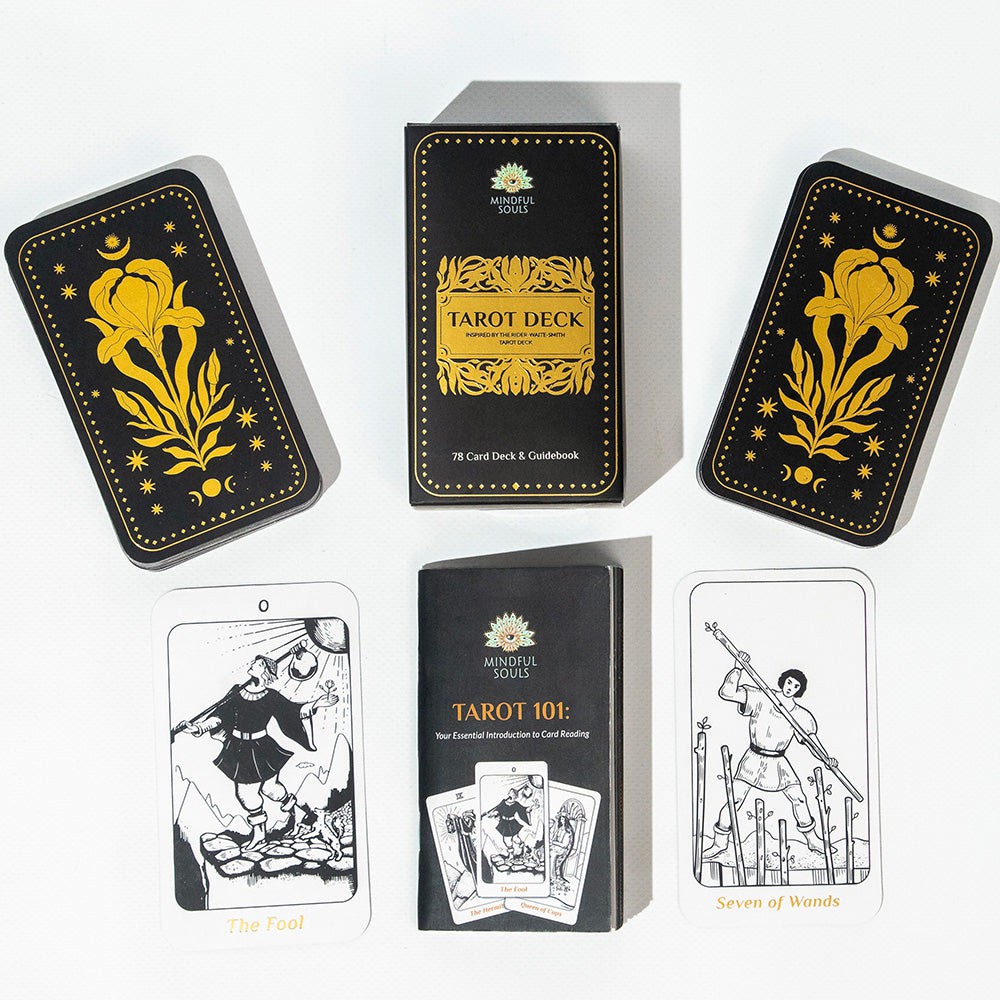
If you want a deck that feels aligned with everything you’ve just learned, explore our Mindful Souls Original Tarot Deck, a beautifully illustrated set designed with the Rider–Waite–Smith system in mind, but reimagined through the lens of mindfulness, intuition, and modern spirituality.
















 Mindful Points
 Wishlist
 Contact Us


 60 Seconds
 5 Questions


