Your cart is currently empty...
but it doesn't have to be!
We Think You'll Love This


In This Article:
- What Is Alexandrite? The Stone That Changes Color
- What Does the Name Alexandria Mean?
- What Alexandrite Represents
- Alexandrite Spiritual Properties and Healing Benefits
- Physical Healing Properties (Traditional Beliefs)
- How Color Change Affects Value
- Alexandrite vs Other Gemstones: Durability and Value
- Natural vs Synthetic Alexandrite: What You Need to Know
- Shop Alexandrite Jewelry at Mindful Souls
- "Is Alexandrite Right for You?" Quick Finder
- Loved by Our Community: Natural Alexandrite Crystal Ring
- Alexandrite and the Zodiac: Gemini and Cancer
- How to Care for Alexandrite Jewelry
- A Few Things Worth Knowing
What Is Alexandrite? The Stone That Changes Color
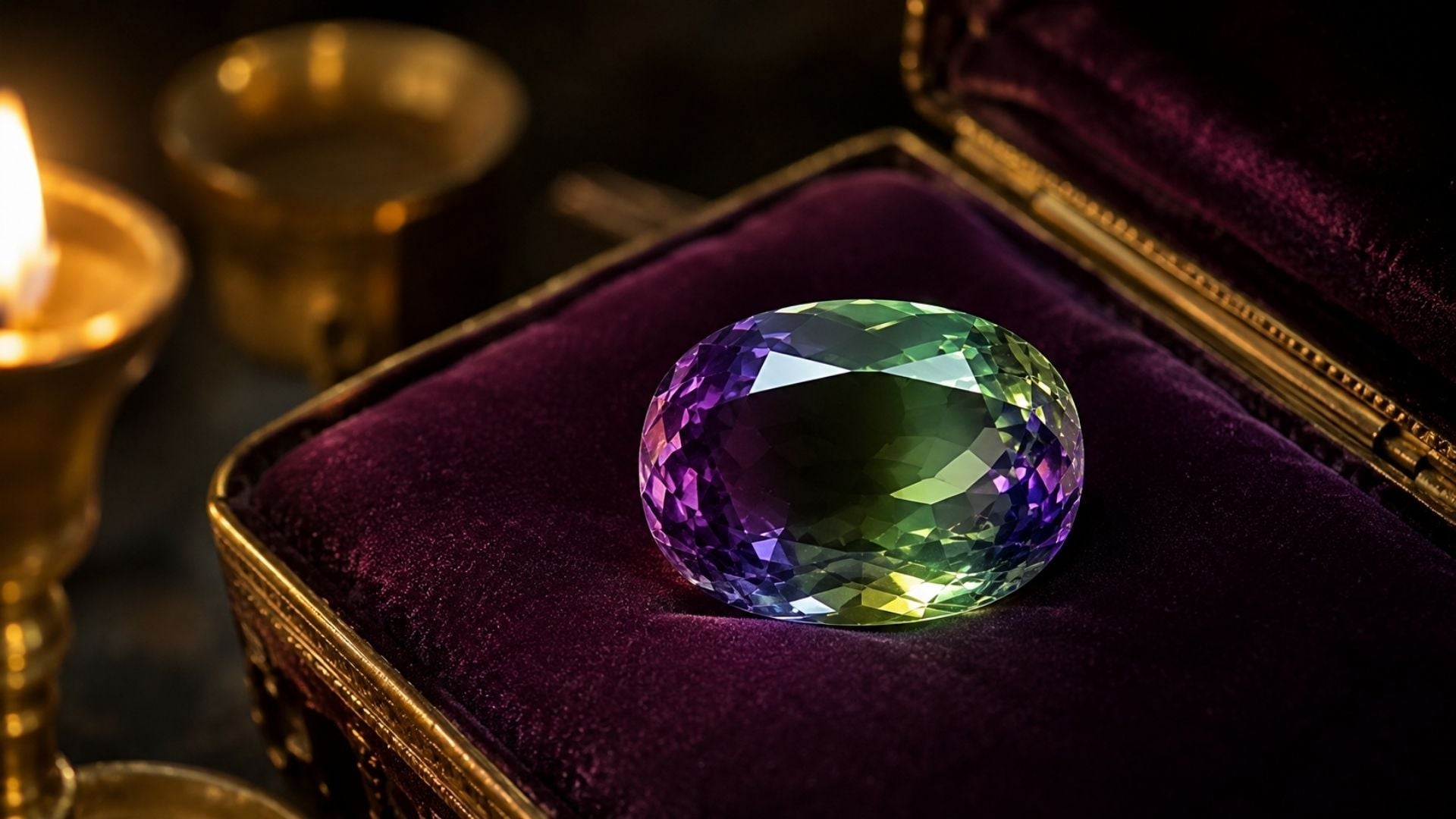
Alexandrite is a rare variety of the mineral chrysoberyl that exhibits one of the most remarkable phenomena in gemology: pleochroism combined with a dramatic color change. In natural daylight or fluorescent lighting, Alexandrite appears bluish-green to emerald green. Under incandescent or candlelight, it shifts to reddish-purple to raspberry red. This effect has earned it the famous nickname "emerald by day, ruby by night."
According to the Gemological Institute of America, this color change occurs because of the way Alexandrite absorbs light. The stone contains trace amounts of chromium, the same element that makes Emeralds green and Rubies red. In Alexandrite, chromium sits in a unique crystallographic position that allows it to absorb different wavelengths of light depending on the light source, creating that stunning shift between green and red.
Here's what makes this stone so remarkable at a glance:
- Mineral: Chrysoberyl (color-change variety)
- Mohs hardness: 8.5 (extremely durable, harder than Emerald and Sapphire)
- Color: Green in daylight → Red/purple under warm light
- Major sources: Russia (original), Brazil, Sri Lanka, East Africa, India
- Chakras: Heart Chakra and Third Eye Chakra
- Zodiac: Gemini and Cancer
- Birthstone: June (alongside Pearl and Moonstone)
The Discovery of Alexandrite
Alexandrite was first discovered in 1830 in the Ural Mountains of Russia. According to historical accounts, it was found in Emerald mines near the Tokovaya River and initially mistaken for Emerald due to its green color. When miners examined the stones under candlelight that evening, they were stunned to see that the green had shifted to brilliant red.
The stone was named after Tsar Alexander II of Russia (Former emperor of Russia), who was celebrating his coming of age on the day of the discovery. The green and red colors also happened to match the Imperial Russian military colors, which cemented Alexandrite as a national treasure and a symbol of Russian pride almost overnight.

What Does the Name Alexandria Mean?
While Alexandrite takes its name from Tsar Alexander II, the name Alexandria itself has Greek origins, derived from the Greek name Alexandros, meaning "defender of the people." This connection to protection and strength adds another layer of meaning to this already powerful stone.
The Meaning and Symbolism of Alexandrite
The Alexandrite's meaning goes far beyond its stunning appearance. This stone has carried deep symbolic significance since the moment it was discovered, and its dual-color nature gives it a symbolism that's uniquely its own.
What Alexandrite Represents
1. Balance between opposites
Alexandrite's ability to shift between green and red symbolizes the balance between the physical and spiritual worlds, between logic and emotion, between what you see on the surface and what lies beneath. It's a stone for people who hold complexity within them.
2. Transformation and adaptability
Just as the stone physically transforms in different light, Alexandrite is associated with personal transformation, the ability to adapt gracefully to changing circumstances and emerge stronger on the other side.
3. Good fortune and prosperity
Since its discovery, Alexandrite has been considered a powerful luck stone. In Russian tradition, it was believed to bring fortune to whoever possessed it, and this association with luck and prosperity has carried through to modern crystal practice.
4. Joy and self-renewal
Alexandrite's color change has also been interpreted as a symbol of joy, wonder, and the ability to see life from fresh perspectives. It reminds the wearer that the same situation can look entirely different depending on how you choose to see it.

Alexandrite Spiritual Properties and Healing Benefits
Alexandrite activates both the Heart Chakra and Third Eye Chakra simultaneously, creating a powerful bridge between emotional wisdom and intuitive insight. This dual-chakra activation is part of what makes Alexandrite so valued in spiritual practice.
Here are some of the most commonly associated spiritual properties and healing benefits of Alexandrite:
Spiritual Properties
1. Heightened intuition
Alexandrite is traditionally believed to sharpen your inner knowing and help you trust your instincts, especially during periods of uncertainty or major decisions.
2. Emotional balance
The stone's connection to the Heart Chakra is believed to support emotional processing, helping you feel your feelings without being overwhelmed by them. It encourages honesty with yourself about what you truly want.
3. Spiritual awakening
Many practitioners consider Alexandrite a catalyst for spiritual growth. Its energy is believed to gently push you toward deeper self-awareness and connection with your higher self.
4. Enhanced creativity
Alexandrite's transformative nature is also associated with creative thinking, the ability to see problems from new angles and find solutions that others miss.
Physical Healing Properties (Traditional Beliefs)
Traditionally, Alexandrite is believed to support the nervous system, encourage healthy circulation, and promote feelings of physical strength and renewed energy. While these beliefs come from holistic traditions rather than scientific evidence, Alexandrite remains a meaningful crystal for many people seeking emotional comfort and wellness support.
As always, crystals are a beautiful complement to wellness but should never replace professional medical care.
The Science Behind the Color Change
The color-changing properties of Alexandrite are among the most studied phenomena in gemology, and understanding the science makes the stone even more fascinating.
Alexandrite's color change happens because of how chromium ions interact with different wavelengths of light inside the crystal structure. Here's how it works:
☀️ In daylight (white light) → The stone absorbs red and orange wavelengths and transmits green and blue wavelengths, making it appear bluish-green
🕯️ In warm/incandescent light → The light source is richer in red wavelengths, and Alexandrite's chromium ions respond by transmitting more red light, making the stone appear reddish-purple
The stronger and more dramatic the color change, the more valuable the stone. Top-quality Alexandrite shows a vivid shift from pure green to pure red, though most specimens fall somewhere between bluish-green and purplish-red.
How Color Change Affects Value
The Alexandrite color meaning is directly tied to its market value. Stones with:
- Strong, dramatic color change (vivid green to vivid red) → highest value
- Moderate color change (greenish to brownish-red) → mid-range value
- Weak color change (slight tonal shift) → lower value
According to GIA, fine-quality natural Alexandrite with strong color change can command $15,000 to $70,000+ per carat, making it one of the most valuable gemstones in the world, rarer and often more expensive than Diamond.
Alexandrite vs Other Gemstones: Durability and Value
One of the most common questions about Alexandrite is how it compares to other popular gemstones. Here's a clear breakdown:
|
Category |
Alexandrite |
Diamond |
Sapphire |
Emerald |
|
Mohs hardness |
8.5 |
10 |
9 |
7.5–8 |
|
Durability |
Excellent |
Exceptional |
Excellent |
Good (more fragile) |
|
Rarity |
Extremely rare |
Common (mined widely) |
Moderately rare |
Moderately rare |
|
Color change? |
Yes (green → red) |
No |
Rare (some varieties) |
No |
|
Price per carat (fine) |
$15,000–$70,000+ |
$5,000–$50,000+ |
$1,000–$15,000 |
$1,000–$10,000 |
|
Birthstone month |
June |
April |
September |
May |
Key takeaway: Alexandrite is harder than Emerald (8.5 vs 7.5–8 Mohs), nearly as hard as Sapphire (9), and second only to Diamond (10) among popular gemstones. This makes it exceptionally durable for everyday jewelry. Its rarity and color-change ability often make it more valuable per carat than all three of its competitors.

Natural vs Synthetic Alexandrite: What You Need to Know
Because natural Alexandrite is so rare and expensive, synthetic versions are widely available. Knowing the difference protects both your investment and your spiritual practice.
Natural Alexandrite:
- Formed over millions of years under extremely specific geological conditions
- Contains natural inclusions (tiny imperfections that prove authenticity)
- Shows nuanced, complex color change with subtle undertones
- Comes with gemological certification from trusted labs
- Price reflects its extraordinary rarity
Synthetic (Lab-Created) Alexandrite:
- Created in a laboratory using the same chemical composition
- Often appears "too perfect" with no natural inclusions
- Color change can appear overly dramatic or artificial
- Significantly less expensive
- Chemically identical, but does not carry the same energetic properties that many crystal practitioners value
How to Spot the Difference:
- Look for inclusions: real Alexandrite almost always has tiny natural marks visible under magnification
- Check the color change: natural stones show subtle, complex shifts; synthetics tend to look "too clean."
- Ask for certification: a GIA or reputable lab certificate confirms natural origin. Here at Mindful Souls, we carefully source our gemstones to help ensure quality and authenticity you can trust!
- Consider the price: if it seems too affordable for Alexandrite, it likely isn't natural

Shop Alexandrite Jewelry at Mindful Souls
Looking to buy a natural Alexandrite gemstone online? Every piece at Mindful Souls features 100% natural stones, ethically sourced and certified for authenticity. Here are our picks for Alexandrite lovers:
-
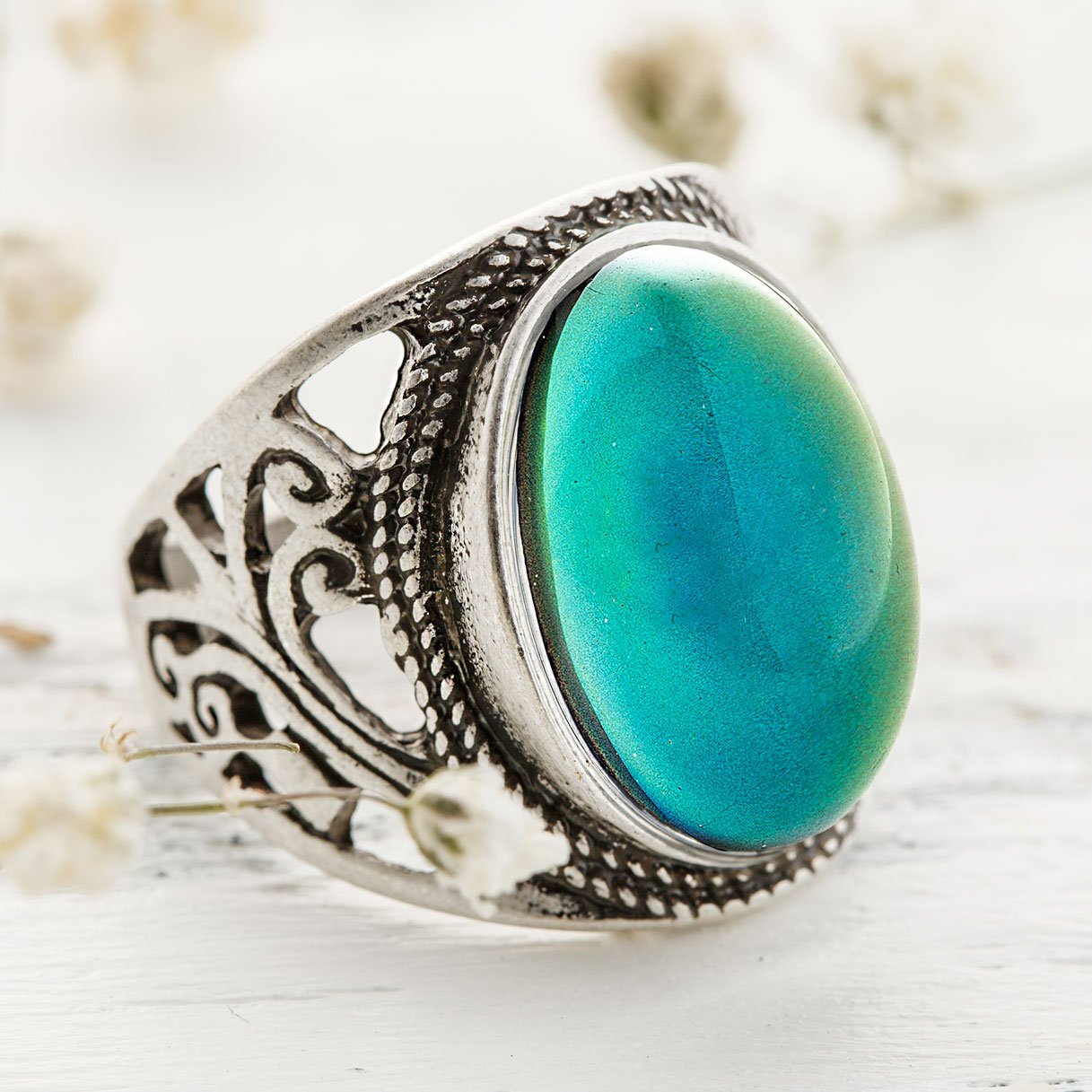
Natural Alexandrite Crystal Ring
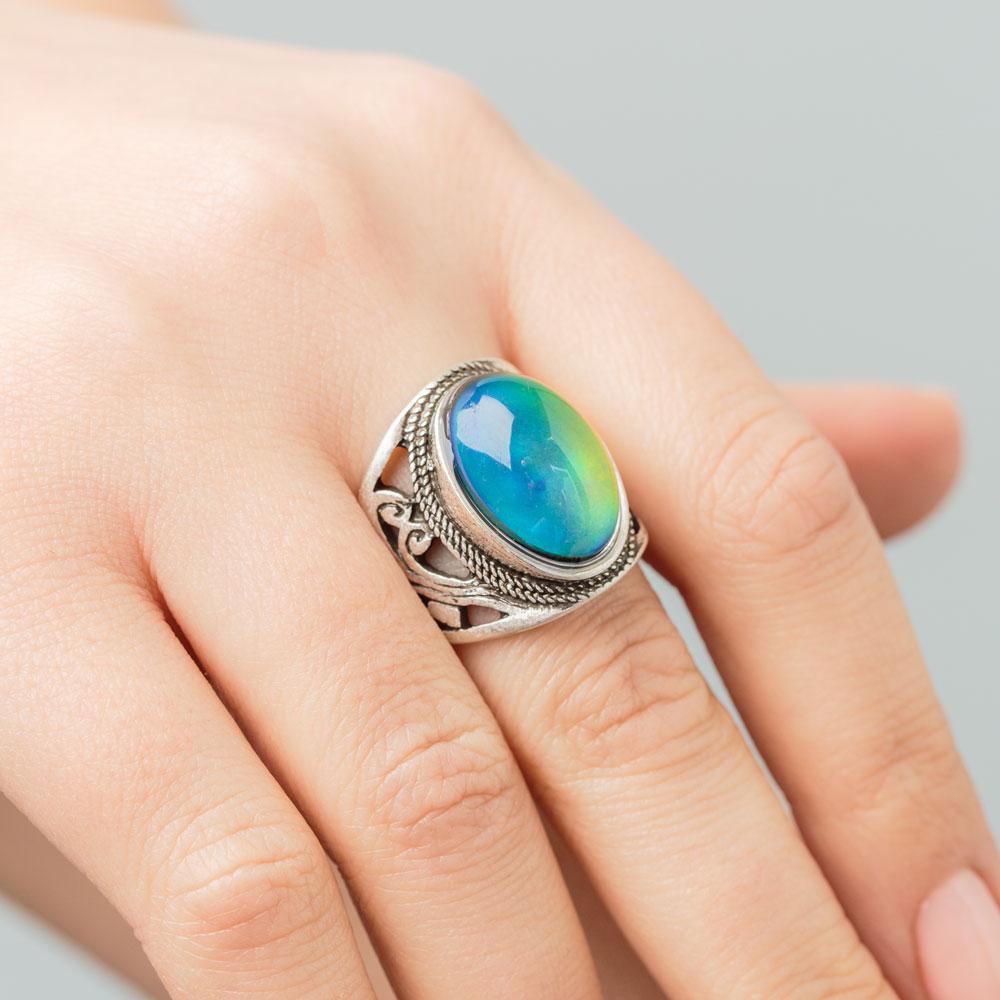
Our stunning natural Alexandrite ring features a genuine color-changing stone in an adjustable sterling silver setting. Watch it shift from green to purple-red depending on your lighting. This is a true collector's piece and one of the rarest stones in our entire collection. Once it's gone, it's gone.
SHOP NOW -
Pearl Necklace & Earrings Set + Bracelet
Want to explore all three June birthstones? This Moonstone ring pairs beautifully with Alexandrite for a complete June birthstone collection. Moonstone's intuitive energy complements Alexandrite's transformative power perfectly.
SHOP NOW


"Is Alexandrite Right for You?" Quick Finder
Not sure if Alexandrite is your stone? Find yourself below:
Alexandrite is calling you if...
- You're going through a major life transition and need support adapting
- You value balance between your head and your heart
- You're drawn to rare, extraordinary things with real meaning
- You want a June birthstone that feels truly special
- You're a Gemini or Cancer looking for your most powerful zodiac stone
You might also love Alexandrite if...
- You appreciate the science behind gemstones as much as the spirituality
- You want jewelry that literally transforms depending on the light
- You're looking for a meaningful milestone gift (birthday, anniversary, graduation)
- You believe in the power of good fortune and want to carry it with you
Loved by Our Community: Natural Alexandrite Crystal Ring
Here's how Mindful Souls members are experiencing their Alexandrite Crystal Ring:
⭐⭐⭐⭐⭐ Nicole
“I can't stop staring at this ring! The color change is mesmerizing, green in my office and purple when I get home in the evening. It feels special knowing how rare this stone is. Absolutely love it."
⭐⭐⭐⭐⭐ Tara
"I bought this for my June birthday, and it's the most unique piece of jewelry I own. The adjustable band fits perfectly, and the Alexandrite stone catches light in the most beautiful way. I get compliments every time I wear it!"
⭐⭐⭐⭐⭐ Megan·
"I was skeptical about buying Alexandrite online, but the quality blew me away. The stone is gorgeous, the color shift is real, and the ring itself feels well-made. So happy I trusted Mindful Souls with this purchase."
Alexandrite and the Zodiac: Gemini and Cancer
As a June birthstone, Alexandrite spans two zodiac signs and resonates with both in different ways:
Gemini (May 21 to June 20)
Gemini is an Air sign ruled by Mercury, known for adaptability, curiosity, and dual nature. Alexandrite's color-changing ability mirrors Gemini's versatile personality perfectly. It supports Gemini's need for mental stimulation while helping them stay grounded during periods of scattered energy. Wear Alexandrite as a ring for constant, subtle energy throughout the day.
Cancer (June 21 to July 22)
Cancer is a Water sign ruled by the Moon, known for emotional depth, intuition, and nurturing energy. Alexandrite's Heart Chakra connection supports Cancer's emotional world, helping them process feelings with clarity rather than being overwhelmed. Keep Alexandrite on your nightstand for deeper emotional healing during sleep.
How to Care for Alexandrite Jewelry
Alexandrite is one of the more durable gemstones (8.5 Mohs), but proper care ensures it stays beautiful for generations:
Do this:
- Clean with warm soapy water and a soft brush
- Store in a soft cloth pouch separately from other jewelry
- Remove before heavy physical activity to prevent impact damage
- Ultrasonic cleaning is generally safe for Alexandrite
Skip this:
- Steam cleaners (sudden temperature changes can cause stress fractures)
- Harsh chemicals or abrasive cleaners
- Storing loose with harder stones like Diamonds (can scratch other gems nearby)
A Few Things Worth Knowing
Whether you're a June baby, a collector, or a crystal lover, keep these in mind:
✅ Alexandrite rates 8.5 on the Mohs scale, harder than Emerald and nearly as hard as Sapphire
✅First discovered in Russia's Ural Mountains in 1830 and named after Tsar Alexander II
✅Fine natural Alexandrite can command $15,000 to $70,000+ per carat
About Mindful Souls
Mindful Souls started in 2018 with a simple idea: to make crystals and spiritual practices feel more accessible in everyday life. Today, we're a community of over 180,000 people exploring these tools in a practical, personal way.
We carefully source all of our crystals directly from ethical suppliers around the world, ensuring they are 100% natural. Each one is also tested and third-party lab certified for authenticity and quality, so you always know what you're working with. If you're curious about how it all started, you can read more on our story page.


























 Mindful Points
 Wishlist
 Contact Us


 60 Seconds
 5 Questions


