Your cart is currently empty...
but it doesn't have to be!
We Think You'll Love This


In This Article:
- What Is Emerald Crystal?
- What Does Emerald Mean?
- What Are the Benefits and Healing Properties of Emerald?
- Which Chakra Is Emerald Connected To?
- Is Emerald the May Birthstone?
- What Are the Different Types of Emerald?
- Emerald vs Other Green Stones
- How to Use Emerald Crystal Daily
- Emerald Jewelry Guide
- Real Emerald vs Fake Emerald: How to Tell
- How to Choose an Emerald
- How to Cleanse and Care for Emerald
- Key Takeaways
- Conclusion
- About Mindful Souls
What Is Emerald Crystal?
Emerald is a green gemstone variety of beryl, a beryllium aluminum silicate with the formula Be₃Al₂(SiO₃)₆. It belongs to the same beryl family as blue aquamarine, pink morganite and golden heliodor. Only beryl with a rich green color is called emerald. Paler green beryl is simply "green beryl".
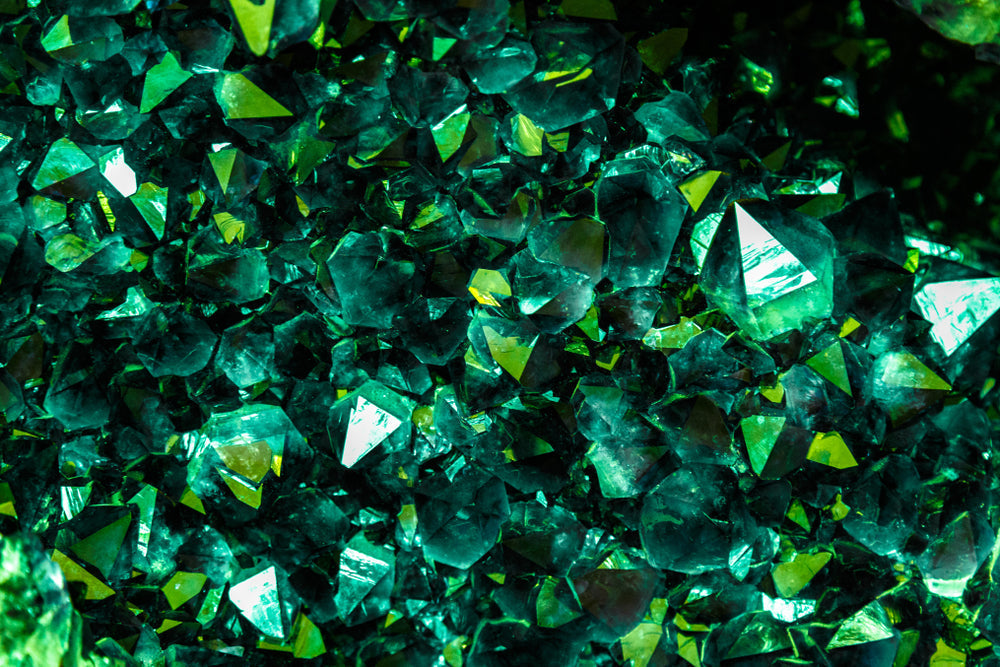
As a gemstone, emerald is prized for its deep, glowing green. As a crystal, it grows in six sided (hexagonal) columns, often set in white calcite or dark schist rock.
Why Is Emerald Green?
Tiny amounts of chromium, vanadium or both replace some of the aluminum inside the beryl crystal. Chromium gives the warm, pure green of Colombian emeralds. A touch of iron adds the bluish green seen in many Zambian stones.
Where Do Emeralds Come From?
- Colombia: the most famous source, with the Muzo, Chivor and Coscuez mines. Known for pure, vivid green and the rare trapiche pattern.
- Zambia: the second major source, with deep, slightly bluish green stones and often fewer inclusions.
- Brazil: lighter to medium green stones, widely used in jewelry.
- Zimbabwe: small but intensely colored Sandawana emeralds.
- Other sources: Afghanistan, Pakistan, Ethiopia, Madagascar and Russia.
- Ancient Egypt: "Cleopatra's mines" near the Red Sea were among the earliest known emerald mines.
Emerald Properties at a Glance
| Property | Details |
|---|---|
| Mineral | Beryl |
| Chemical formula | Be₃Al₂(SiO₃)₆ |
| Cause of color | Chromium and/or vanadium |
| Mohs hardness | 7.5 to 8 |
| Toughness | Fair to poor, because of natural inclusions |
| Crystal system | Hexagonal |
| Specific gravity | About 2.72 |
| Luster | Glassy |
| Transparency | Transparent to opaque |
| Colors | Light to deep green, sometimes bluish or yellowish green |
| Common treatment | Oil or resin filling of surface reaching fractures |
| Main sources | Colombia, Zambia, Brazil, Zimbabwe |
| Birthstone | May |
| Anniversaries | 20th and 35th |
| Chakra | Heart |
| Zodiac signs | Taurus (also Gemini and Cancer) |
| Planet | Venus (Western), Mercury (Vedic) |
What Does Emerald Mean?
Emerald means love, rebirth, hope and wisdom. Its green color ties it to spring and renewal, and it is often called the "stone of successful love" and the "jewel of kings".
A Short History of Emerald
- Ancient Egypt: Cleopatra was famous for her love of emeralds and claimed the Egyptian mines as her own. Emeralds were also buried with mummies as a symbol of eternal youth.
- Greece and Rome: emerald was linked with Venus, goddess of love. The Roman writer Pliny the Elder said nothing was greener or more restful to the eye.
- South America: the Muisca people mined Colombian emeralds long before the Spanish arrived in the 1500s and shipped them to Europe and Asia.
- Mughal India: emperors wore huge carved emeralds engraved with prayers and poetry.
- Today: emerald is still one of the most valued colored gems in the world.
Emerald Spiritual Meaning and Symbolism
In crystal traditions, emerald symbolizes:
- Unconditional love: loyal, faithful, heart centered love
- Rebirth: fresh starts and personal growth
- Compassion: kindness toward others and yourself
- Wisdom: clear speech, insight and foresight
- Abundance: growth in every sense, including prosperity
- Harmony: emotional balance and peace in relationships
What Are the Benefits and Healing Properties of Emerald?
In crystal practice, emerald benefits center on love, emotional balance, self love and growth. These emerald healing properties come from tradition and personal experience, not from scientific studies.
- Love and relationships: used to deepen loyalty, trust and harmony between partners. Explore our love collection and gifts for lasting relationships.
- Emotional balance: a calming stone for heavy or stressful seasons.
- Self love and acceptance: a reminder to treat yourself with the same kindness you give others.
- Clear communication: linked with wise, honest speech.
- Growth and abundance: used for new chapters and prosperity intentions. See our prosperity collection.
Does Emerald Really Work?
Science has not shown that emerald heals the body or mind. What emerald does well is act as a beautiful, meaningful reminder of the intention you set with it. Please never use emerald in place of medical or mental health care.
Which Chakra Is Emerald Connected To?
Emerald is connected to the heart chakra (Anahata), the energy center of love, compassion and forgiveness. The heart chakra's color is green, which makes emerald one of its most natural stones.
- Location: center of the chest
- Theme: love, compassion, forgiveness, emotional healing
- How to use emerald: wear an emerald necklace or pendant so it rests near your heart, or hold it over your chest during meditation
Shop our heart chakra crystals and heart chakra boosters, or take our quick chakra quiz to see which chakra needs attention.
Is Emerald the May Birthstone?
Yes, emerald is the official May birthstone. It is also the traditional gem for the 20th and 35th wedding anniversaries. May is the heart of spring, so emerald's green is a fitting symbol for anyone born in that month. Read our full guide to the emerald birthstone for May, explore other May birthstones and Taurus stones, or browse our birthday gifts.
Emerald Zodiac Signs and Planet
Emerald is most closely linked with Taurus, the earthy, loyal sign that rules most of May. Many also pair it with Gemini, whose season starts in late May, for clear communication, and with Cancer for emotional care. Learn why emerald suits Taurus so well, shop our Taurus season picks or visit the Gemini collection.
In Western tradition emerald belongs to Venus, planet of love. In Vedic astrology emerald (panna) is the gem of Mercury, planet of intellect and speech.
What Are the Different Types of Emerald?
The main emerald types are grouped by origin, pattern and how they were made.
By origin
- Colombian emerald: the benchmark, pure warm green, usually with more inclusions.
- Zambian emerald: deep, slightly bluish green and often cleaner.
- Brazilian emerald: lighter green, affordable and popular in jewelry.
By pattern or form
- Trapiche emerald: a rare Colombian emerald with a six spoke, wheel like pattern of dark lines.
- Raw emerald: uncut crystals, often still in rock. Loved for crystal grids and display. Browse our raw crystals.
- Cabochon emerald: polished into a smooth dome, often used for included or opaque material.
By origin in the lab or trade name
- Lab created emerald: has the same chemistry as natural emerald but is grown in a lab. It is real emerald, not glass, but it is worth much less than natural stones.
- "Emerald quartz": a trade name, usually for green quartz or emerald crystals set in quartz. It is not a single gem emerald.
Emerald vs Other Green Stones
Emerald is often confused with other green gems. The quickest clues are its signature inclusions, its pure green and its price. Our guide to green crystals and their meanings covers the whole family.
| Stone | Mineral | Hardness | How It Looks Next to Emerald | Meaning |
|---|---|---|---|---|
| Emerald | Beryl | 7.5 to 8 | Pure to bluish green, visible "garden" inclusions | Love, rebirth |
| Peridot | Olivine | 6.5 to 7 | Yellowish lime green, usually very clean | Joy, positivity |
| Tsavorite garnet | Grossular garnet | 7 to 7.5 | Bright green, more sparkle, fewer inclusions | Prosperity, growth |
| Jade | Jadeite or nephrite | 6 to 7 | Opaque to translucent, waxy or silky shine | Luck, harmony |
| Green aventurine | Quartz | 6.5 to 7 | Opaque with tiny glittering flecks | Opportunity, luck |
| Green tourmaline | Tourmaline | 7 to 7.5 | Darker, often olive or forest green, long crystals | Vitality, balance |
For deeper reads, see our guides to nephrite jade, apple green chrysoprase and diopside, the Russian emerald.
How to Use Emerald Crystal Daily
Wear it close to your heart, meditate with it, give it a place at home or set it as a love intention.
- Jewelry: the easiest way to keep emerald with you all day. See the jewelry guide below.
- Meditation: hold a raw emerald over your heart for 5 minutes and breathe into a feeling of kindness. Our meditation collection has tools to go with it.
- Home: place a raw emerald or emerald crystal figurine in the living room for harmony, or in the east of the home, the feng shui area for growth and family. See our feng shui collection.
- Bedroom: keep a small emerald on your nightstand as a gentle end of day ritual.
- Intention setting: write a love or growth intention and place your emerald on it overnight.
- Gifting: a meaningful present for May birthdays, 20th anniversaries or a new chapter in someone's life.
Emerald Jewelry Guide
Emerald jewelry is beautiful for daily wear with a little care. Emerald is hard (7.5 to 8) but its natural inclusions make it less tough than ruby or sapphire, so protective settings matter.
Shop Emerald by Style
- Emerald ring: the most popular emerald piece. Choose a bezel or halo setting to protect the corners, and take it off for heavy tasks. Browse crystal rings.
- Emerald necklace and pendant: sits close to the heart chakra and is the safest way to wear emerald daily. See our necklaces.
- Emerald earrings: very low risk of knocks, ideal for finer stones. Shop crystal earrings.
- Emerald bracelet: beaded bracelets let you touch the stone through the day. Explore spiritual bracelets.
- Matching sets: a thoughtful gift for May birthdays. See our jewelry sets.
Metal tip: yellow gold warms up Colombian green, while sterling silver and white gold make bluish Zambian emeralds look crisp and cool.
What Is an Emerald Cut?
The emerald cut is a rectangular step cut with trimmed corners. It was designed for emerald because the cut corners reduce the risk of chipping and the long, flat facets show off the stone's color. Today the emerald cut is used for many gems, including diamonds.
Who Should Wear Emerald?
- Anyone born in May, or celebrating a 20th or 35th anniversary
- Taurus, Gemini and Cancer signs
- People focused on love, healing a relationship or self love
- Anyone starting a new chapter and wanting a symbol of growth
Real Emerald vs Fake Emerald: How to Tell
A real, natural emerald almost always shows small inclusions under magnification, a slightly uneven green and a price that matches its quality. A flawless, bright emerald at a low price is usually glass, a lab grown stone or a lookalike.
Signs of a natural emerald
- Visible inclusions, called jardin (French for garden), that look like moss, wisps or tiny cracks
- Color that shifts slightly across the stone
- A cool feel, and a weight that is normal for its size
- A seller who discloses origin and treatment
Red flags
- Perfect clarity with no inclusions at all
- Round air bubbles inside (a sign of glass)
- Very bright, even color at a very low price
- A green layer glued on top of a colorless stone (a doublet or triplet)
- No information about treatment
Lab created emeralds have the same chemistry as natural emeralds, so only a gem lab can reliably tell them apart. For a valuable piece, ask for a report from a recognized lab such as GIA, AGL, SSEF or Gübelin. Note that UV light is not a reliable home test, because many natural emeralds also glow red.
Are Most Emeralds Treated?
Yes, the vast majority of emeralds are treated with colorless oil or resin. It fills tiny surface cracks and improves clarity. This is a normal, accepted practice, but it should always be disclosed. Treatments are graded from none to significant, and untreated emeralds are rare and far more valuable.
How to Choose an Emerald
Color matters most with emerald, followed by clarity, cut and carat.
- Color: the most valued emeralds are pure green to slightly bluish green with strong saturation. Too dark or too pale lowers the value.
- Clarity: expect some inclusions. Choose a stone that looks lively to the eye, not one that is perfectly clean.
- Cut: the emerald cut, oval and cushion shapes protect the stone and show off its color.
- Carat: larger fine emeralds are rare. Prices rise sharply with size.
- Treatment: ask if the stone is untreated, minor, moderate or significantly treated.
- Seller: buy from a shop that names the stone, size and metal on every listing.
Explore natural stones in our healing crystals collection.
How to Cleanse and Care for Emerald
Wipe emerald with lukewarm soapy water and a soft cloth, and avoid heat, soaking and ultrasonic or steam cleaners. Heat and strong cleaning can remove the oil that fills its tiny fractures.
- Clean: a soft cloth or soft brush with lukewarm water and a drop of mild soap. Dry right away.
- Avoid: soaking, ultrasonic and steam cleaners, harsh chemicals, sudden temperature changes and long hours in strong sun.
- Energy cleanse: moonlight, sound from a singing bowl, sage smoke or a selenite charging plate.
- Store: in a soft pouch away from diamonds and sapphires, which can scratch it.
- Re oil: if a fine emerald starts to look duller over the years, a jeweler can re oil it.
More methods are in our cleansing and charging guide.
Key Takeaways
- Emerald crystal meaning centers on love, rebirth, compassion, wisdom and abundance.
- Emerald is green beryl colored by chromium or vanadium, with a hardness of 7.5 to 8.
- It is the May birthstone, the 20th and 35th anniversary gem and a heart chakra stone.
- It suits Taurus most, with Venus as its Western planet and Mercury in Vedic astrology.
- Top types: Colombian, Zambian, Brazilian, trapiche and raw emerald.
- Real emeralds show jardin inclusions, and most are oil treated.
- Clean with lukewarm soapy water only, never ultrasonic or steam.
Conclusion
Emerald has been a symbol of love and renewal since Cleopatra's time, and it still feels fresh today. Once you understand its inclusions, its treatments and how to choose one, buying and wearing emerald becomes simple and joyful. Whether you are celebrating a May birthday, an anniversary or a new chapter, emerald is a meaningful way to carry that intention with you.
Ready to find yours? Explore our emerald jewelry and crystals collection, or receive handpicked crystals every month with a crystal subscription box.
About Mindful Souls
Mindful Souls started in 2018 with a simple idea: to make crystals and spiritual practices feel more accessible in everyday life. Today, we're a community of over 180,000 people exploring these tools in a practical, personal way.
We carefully source all of our crystals directly from ethical suppliers around the world, ensuring they are 100% natural. Each one is also tested and third-party lab certified for authenticity and quality, so you always know what you're working with. If you're curious about how it all started, you can read more on our story page.
















 Mindful Points
 Wishlist
 Contact Us


 60 Seconds
 5 Questions


Looking to purchase a 5 caret , emerald cut stone. Please send me a price.
Thank you.