Your cart is currently empty...
but it doesn't have to be!
We Think You'll Love This


In This Article:
- What Is Amethyst?
- What Are the Healing Properties of Amethyst?
- The Symbolism of Amethyst
- Amethyst and the 4 Clairs (Psychic Senses)
- Types of Amethyst: A Variety Guide
- Amethyst Shapes and Forms (and How to Choose)
- How to Identify Authentic Amethyst
- Amethyst Feng Shui Placement
- Pairing Amethyst With Other Crystals
- How to Cleanse and Care for Amethyst
- Comparison: Which Amethyst Should You Buy?
- Common Mistakes to Avoid
- Expert Tips
- Key Takeaways
- Conclusion
- MindfulSouls 100% Authentic Certified Crystals
What Is Amethyst?
Amethyst is a purple variety of quartz that gets its color from iron and natural irradiation inside the earth. It ranges from soft lilac to deep violet and is one of the most popular healing crystals in the world. Traditionally, amethyst is associated with calm, intuition, sleep, and spiritual protection, and it's linked to the Third Eye and Crown chakras.
You can explore genuine, ethically sourced pieces in the amethyst collection at Mindful Souls, or keep reading for the full breakdown first.
But here's what most guides skip. "Amethyst" isn't one single thing. There's pale lavender Vera Cruz, deep Zambian purple, green amethyst, red amethyst, Brandberg, and golden-streaked cacoxenite, plus a dozen shapes from raw clusters to polished towers. Once you know the differences, you shop smarter and you choose pieces that actually fit what you're looking for.
This guide covers all of it: what amethyst is, its traditional healing properties and symbolism, the main varieties and forms, how to tell real amethyst from dyed glass, where to place it for feng shui, and how to buy authentic stones online without overpaying.
What Are the Healing Properties of Amethyst?
Amethyst is traditionally believed to support calm, mental clarity, restful sleep, and emotional balance. Many crystal enthusiasts use it to quiet a busy mind, ease stress, and create a peaceful space for meditation. It's often called a "natural tranquilizer" in crystal lore, though that's a spiritual association, not a medical claim.
A few of the qualities people most often connect with amethyst:
- Calm and stress relief — a go-to stone for winding down and easing an anxious mind.
- Sleep and dreams — frequently kept in the bedroom and under pillows for peaceful rest (see the deep sleep collection).
- Intuition and the "4 clairs" — see the dedicated section below.
- Spiritual protection — believed to shield against negative or draining energy.
- Focus and a sense of peace — the name itself comes from a Greek word linked to clear-headedness.
If you're building a collection of healing stones and crystals, amethyst is one of the best starting points, since it's gentle, versatile, and widely loved by beginners and longtime collectors alike. For the deeper meaning and ritual side, our full amethyst meaning and healing properties guide goes further.

The Symbolism of Amethyst
Amethyst has carried meaning for thousands of years. The ancient Greeks linked it to clarity and self-control, and it has long been a symbol of wisdom, peace, and spiritual devotion. Royalty wore it as a sign of dignity, and it still appears in religious jewelry today.
In modern crystal practice, amethyst symbolizes the bridge between the everyday mind and higher awareness. That's why it shows up so often in meditation corners and altars. It represents calm strength, the kind that comes from a settled, clear mind rather than force.
Amethyst and the 4 Clairs (Psychic Senses)
Amethyst is one of the stones most associated with developing the 4 clairs, the four main channels of intuitive perception:
| Clair | What it means | Sense it relates to |
|---|---|---|
| Clairvoyance | "Clear seeing" — images, visions, symbols | Sight |
| Clairaudience | "Clear hearing" — inner words or sounds | Hearing |
| Clairsentience | "Clear feeling" — gut feelings, emotions | Touch/feeling |
| Claircognizance | "Clear knowing" — sudden certainty | Knowing |
Because amethyst is tied to the Third Eye and Crown chakras, many practitioners reach for it when they want to strengthen the clairs through meditation. The practice is simple: hold or sit near your amethyst, breathe slowly, and pay attention to whichever sense feels most active. Over time, people often notice one or two clairs come more naturally than the others.

Types of Amethyst: A Variety Guide
This is where amethyst gets interesting. Here are the varieties you'll actually run into when you're shopping, and what makes each one different. All of them belong to the wider quartz family.
| Variety | Color | What makes it special |
|---|---|---|
| Classic (Brazilian/Uruguayan) | Light to medium purple | Most common; forms clusters and geodes; great value |
| African (Zambian) amethyst | Deep, saturated purple with red/blue flashes | Richest color; favored for fine jewelry |
| Vera Cruz amethyst | Pale lavender, very clear | Slender, often double-terminated points; high-vibration collector's stone |
| Brandberg amethyst | Purple blended with clear and smoky quartz | From Namibia; may contain water bubbles (enhydros); prized for clearing |
| Green amethyst (Prasiolite) | Soft mint green | Usually heat-treated amethyst; linked to the heart and abundance |
| Red amethyst | Purple with reddish tint | Color from hematite inclusions; grounding "green red crystal" appeal |
| Cacoxenite amethyst | Purple with golden/rust streaks | Found in "Super Seven"; associated with spiritual awareness |
| Chevron amethyst | Purple banded with white quartz | V-shaped patterns; popular for focus and the Third Eye |
A quick note on green and red amethyst. Green amethyst (prasiolite) is real, but it's almost always heat-treated rather than naturally green, and a reputable seller will tell you that. Red amethyst gets its warm color from a fine layer of hematite, which is why it doubles as a gently grounding stone.
Amethyst Shapes and Forms (and How to Choose)
The same stone behaves differently depending on its shape. Here's how to pick.
- Clusters and geodes — best for filling a room with calm energy; beautiful as a centerpiece or home accent.
- Geode spheres — radiate energy evenly in all directions; striking display pieces.
- Towers and points — focus intention; popular for meditation and crystal grids.
- Pyramids — concentrate and direct energy upward; common on altars and desks.
- Wands — used in energy work and body layouts.
- Tumbled stones and chips — pocket-friendly; great for grids, jewelry, and décor jars.
- Raw amethyst — keeps the natural, untouched look; ideal if you love rough textures.
- Slices and stalactites — dramatic cross-sections cut from larger formations.
- Carved pieces (flowers, hearts, cups, ornaments) — decorative and giftable; just confirm they're real stone, not dyed glass (browse crystal décor).
There's no single "best" shape. If you want ambient calm, go geode or cluster. If you want a focused meditation tool, choose a tower, point, or pyramid. For carrying daily, tumbled stones or amethyst jewelry win.
How to Identify Authentic Amethyst
Dyed glass and synthetic look-alikes are common, so crystal and stone identification skills save you money. Real amethyst usually shows:
- Color zoning — uneven patches of darker and lighter purple, not perfectly uniform color.
- Natural inclusions — tiny marks, veils, or cloudy spots inside; flawless "amethyst" is a red flag.
- Cool temperature — natural quartz feels cool to the touch and warms slowly; glass warms fast.
- Hardness — amethyst is a 7 on the Mohs scale and won't scratch easily with a steel blade.
- Honest pricing — a giant, deeply saturated, flawless "amethyst" for a few dollars is almost certainly fake.
When you're buying crystals online, the seller matters as much as the stone. Choose a crystal site that shares sourcing details and confirms stones are natural. New to this? Our essentials for beginners and guide to crystals are worth keeping on hand, and you can browse all crystal products in one place.

-
Tumbled Amethyst Stone – Harness the Power of Peace & Healing
Buy authentic tumbled amethyst stone online – natural healing crystal for calm, stress relief, and spiritual protection. Ethically sourced, perfect for beginners and collectors.
SHOP NOW -
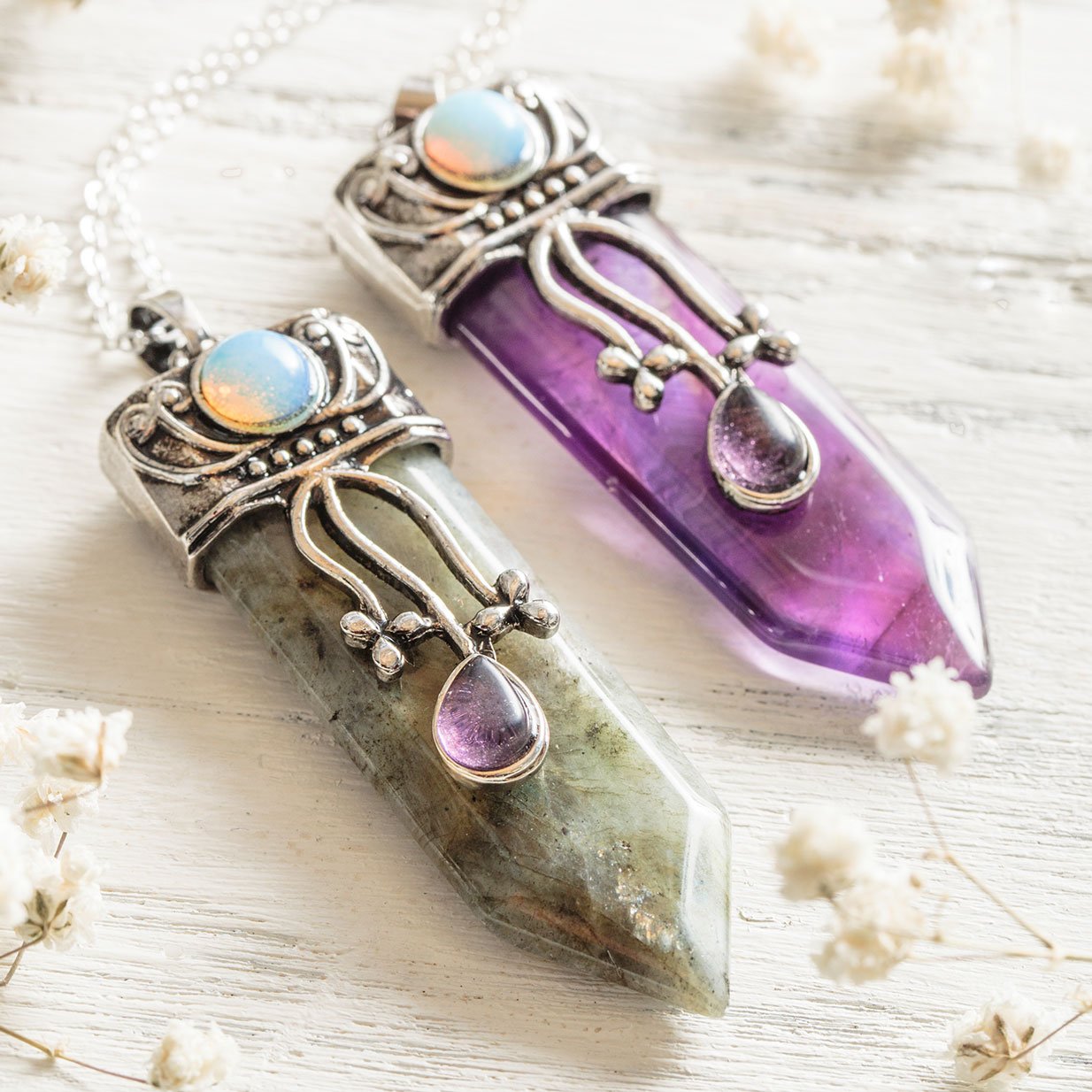
Black Tourmaline & Amethyst Pendant – Twin Power
Shop Black Tourmaline & Amethyst Pendant – powerful crystal jewelry combining grounding protection and intuitive calm. Ideal for daily wear and energy shielding.
SHOP NOW


Amethyst Feng Shui Placement
In feng shui, amethyst is used to invite calm, focus, and spiritual growth. Where you put it shapes what it supports:
- Bedroom — for peaceful, restful sleep (keep it out of long direct sunlight, which can fade it).
- Meditation or study corner — for clarity, concentration, and intuition.
- Wealth area — traditionally the far-left corner from your front door, to support abundance.
- Entryway — to set a serene tone as you come and go.
- Living room — a geode or cluster as a calming focal point.
Trust your space. Place amethyst wherever you most want a softer, more settled energy, and explore more ideas in the feng shui collection.
Pairing Amethyst With Other Crystals
Amethyst plays well with others. A few favorite combinations:
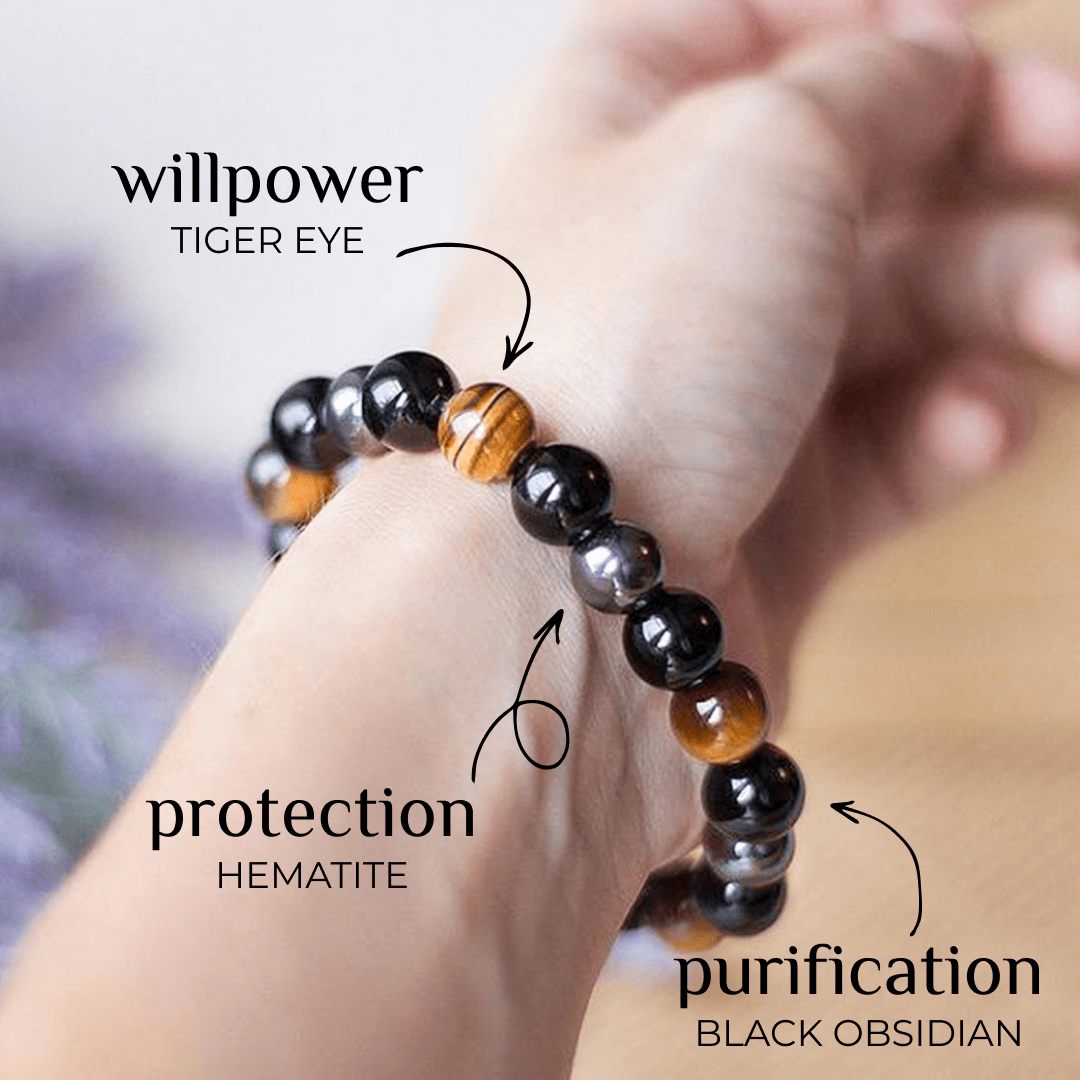
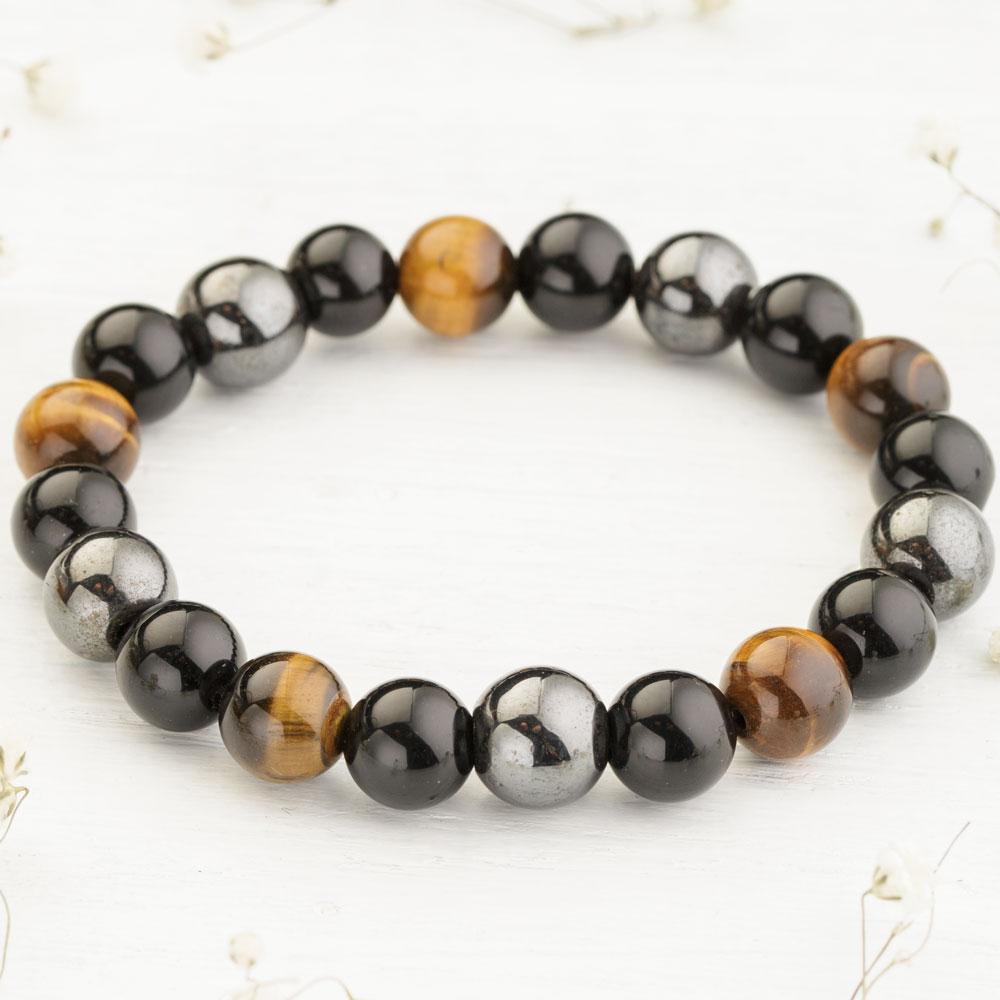
- Amethyst + Hematite — the dreamy, intuitive quality of amethyst grounded by hematite's steadiness. You'll often find this pairing in bracelets, which makes it easy to wear all day.
- Amethyst + Clear Quartz — clear quartz is believed to amplify amethyst's calming energy during meditation.
- Amethyst + Rose Quartz — a gentle pairing for emotional comfort and heart-centered calm.
- Amethyst + Black Tourmaline — for those who want amethyst's peace alongside stronger crystals for strength and protection.
If you're drawn to protection, amethyst layers nicely with a protection stone necklace or a black tourmaline piece for a calm-but-shielded everyday set.
How to Cleanse and Care for Amethyst
Amethyst is durable at a 7 on the Mohs scale, but it has one quirk: it can fade in long, direct sunlight. Charge it in gentle moonlight instead of a sunny windowsill.
To cleanse it, many people use:
- Sage or palo santo smoke — pass the stone through gently.
- Moonlight — leave it out overnight, especially under a full moon.
- Sound — a singing bowl or bell.
A light water rinse is fine occasionally, but avoid long soaks. For a full routine, see our how to cleanse crystals guide. Cleanse roughly every couple of weeks, or after your stone has been part of heavy emotional work.
Comparison: Which Amethyst Should You Buy?
| If you want… | Best pick | Why |
|---|---|---|
| Ambient calm for a room | Geode or cluster | Radiates soft energy; great décor |
| A meditation focus tool | Tower, point, or pyramid | Directs intention |
| Something to carry daily | Tumbled stone or jewelry | Portable and wearable |
| Deep, jewelry-grade color | African (Zambian) amethyst | Richest saturation |
| A delicate collector's piece | Vera Cruz or Brandberg | Rare, high-clarity |
| Grounding energy | Red amethyst | Hematite gives it an earthy edge |
| Heart and abundance themes | Green amethyst (prasiolite) | Soft, uplifting color |
Common Mistakes to Avoid
- Leaving amethyst in direct sun. It will fade over time. Moonlight is safer.
- Assuming all green amethyst is natural. Most prasiolite is heat-treated, and that's okay, but the seller should disclose it.
- Buying "flawless" amethyst cheaply. Real stones have natural marks; perfect clarity at a low price usually means glass.
- Ignoring sourcing. Ethically sourced, authenticity-focused sellers protect you from dyed or synthetic stones.
- Overcomplicating cleansing. You don't need elaborate rituals. Smoke, moonlight, or sound is plenty.

Expert Tips
- Match the form to the goal. Don't buy a giant geode if what you really wanted was a meditation point.
- Start with one quality piece. A single authentic, well-sourced stone beats a drawer of dyed look-alikes.
- Use color zoning to spot real stones. That subtle unevenness is a feature, not a flaw.
- Keep a sleep stone separate. A small tumbled amethyst by the bed is an easy, low-cost place to start.
- Layer for balance. Pair amethyst with a grounding stone like hematite or black tourmaline if it ever feels too "floaty."
Key Takeaways
- Amethyst is a purple quartz tied to calm, intuition, sleep, and the Third Eye and Crown chakras.
- It comes in many varieties: classic Brazilian, deep African, pale Vera Cruz, Brandberg, green (prasiolite), red, and cacoxenite.
- Shape matters: geodes and clusters for ambient calm, towers and pyramids for focus, tumbled stones and jewelry for daily wear.
- Spot real amethyst by color zoning, natural inclusions, cool touch, and honest pricing.
- For feng shui, place it in the bedroom, a meditation corner, or the wealth area.
- Keep it out of direct sun to prevent fading, and cleanse with smoke, moonlight, or sound.
- Buy from ethically sourced, authenticity-focused sellers when purchasing amethyst online.
Conclusion
Amethyst earns its popularity. It's beautiful, beginner-friendly, and endlessly varied, from a humble tumbled stone by your bed to a statement Brandberg point on your altar. Once you understand the varieties, the shapes, and how to spot a genuine stone, you can shop with confidence and choose pieces that actually match what you're looking for, whether that's calm, focus, protection, or simply a gorgeous geode for your home.
Ready to start or grow your collection? Explore authentic, ethically sourced amethyst in the Mindful Souls amethyst collection, browse our best sellers and crystal sets, and pair your stone with a cleansing routine so it stays vibrant for years.
MindfulSouls 100% Authentic Certified Crystals
Every gemstone in our collection is completely natural and comes with an authenticity seal certified by a reputable lab. We take pride in ethically sourcing all our items directly from their native locations, eliminating any middleman. This approach enables us to provide excellent value at a reasonable price.















 Mindful Points
 Contact Us


 60 Seconds
 5 Questions


