Your cart is currently empty...
but it doesn't have to be!
We Think You'll Love This


In This Article:
- What Is an Advent Calendar?
- What Is Advent?
- What Is the Origin of Advent?
- When Is Advent?
- The History of the Advent Calendar
- Why Do We Use an Advent Calendar?
- How Do We Use an Advent Calendar for Christmas?
- Advent Calendar Traditions Around the World
- Types of Advent Calendars and Advent Calendar Ideas
- Alternative Advent Calendar Ideas for a Slower December
- What Is a Crystal Advent Calendar?
- Final Thoughts
- Advent Calendar Quick Answers
What Is an Advent Calendar?
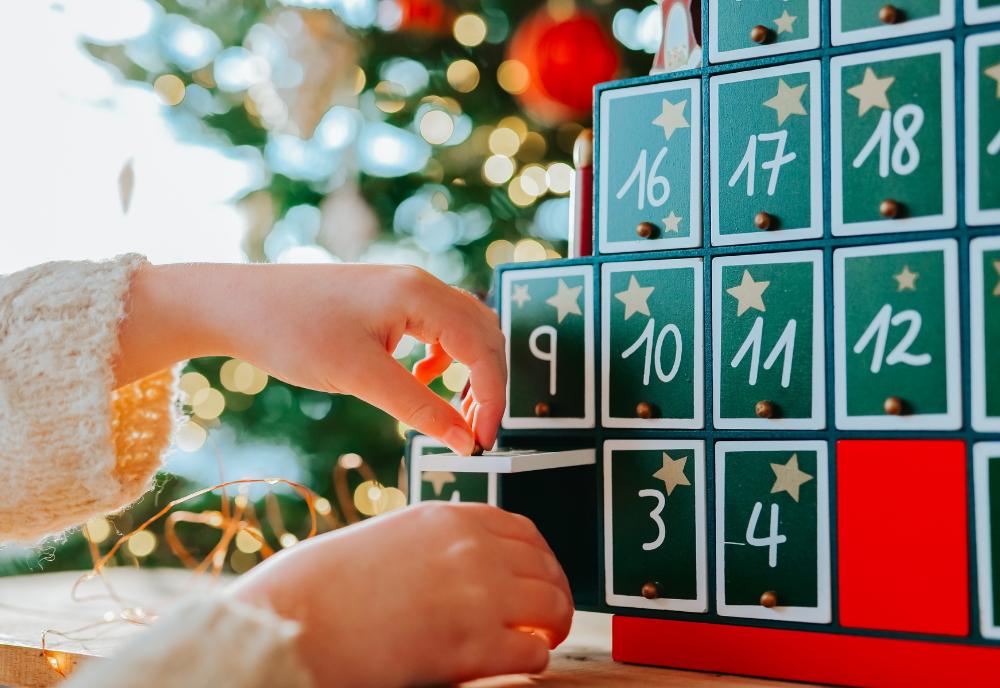
An advent calendar is a physical or digital object designed to count down to Christmas one day at a time. Most versions carry 24 numbered compartments arranged across a festive scene, and each compartment holds a small treat, gift, message, or crystal.
Common formats include:
- Flat printed cards with perforated doors that press open
- Wooden houses or trees with small numbered drawers
- Fabric wall hangings with 24 stitched pockets
- Boxed sets with a sealed compartment for each day of the advent season
- Digital calendars delivered by app, email, or website
The design changes constantly. The idea never does: one day, one door, one small surprise.
How Does an Advent Calendar Work?
An advent calendar works on one rule. You open a single numbered compartment per day, starting December 1, and you do not open ahead.
That last part is the whole point. The restraint is what creates the anticipation.
- Open one door per day, matching the number to the date
- Start on December 1 for a standard 24 day calendar
- Do not skip ahead, even when the box rattles
- Finish on December 24, Christmas Eve, or December 25 on a 25 day calendar
- Open at the same time daily, usually morning, so it becomes a habit rather than an afterthought
If you opened all 24 compartments at once you would have a box of chocolates. Opening one a day turns it into a Christmas countdown calendar, and your whole December moves to that rhythm.
How Many Days Are in an Advent Calendar?
Most advent calendars have 24 days, running December 1 through December 24 and ending on Christmas Eve. Shorter and longer versions are common, and none of them are wrong.
| Length | Dates | Why It Exists |
|---|---|---|
| 24 days | Dec 1 to Dec 24 | The classic format, ending on Christmas Eve. |
| 25 days | Dec 1 to Dec 25 | The final door lands on Christmas Day itself. |
| 12 days | Usually Dec 13 to Dec 24 | A lower-cost option with less pressure that nods to the Twelve Days of Christmas. |
| 31 days | Dec 1 to Dec 31 | Carries the countdown through to New Year's Eve. |
| 4 weeks | Varies by year | Follows the true liturgical Advent season rather than fixed calendar dates. |
What Is Advent?
Advent is the season of preparation and waiting that comes before Christmas in the Christian calendar. Advent is traditionally a time of reflection and hope, spent getting ready both spiritually and practically for Christmas Day.
In most homes today the advent season looks like decorating the tree, lighting candles, baking, wrapping, and gathering. The religious observance and the cozy family ritual have grown into each other over the centuries, and for many people they now sit comfortably side by side.
What Is the Meaning of Advent?
The meaning of Advent comes from the Latin word adventus, which translates as "coming" or "arrival." Advent refers to the anticipation before Christmas rather than the celebration itself.
So Advent is not the party. Advent is everything that happens before the party: the waiting, the preparing, the quiet build up.
And that is the advent calendar meaning hiding underneath all the cardboard and chocolate. The calendar does not exist to give you 24 things. It exists to make the waiting itself feel like something.
Is an Advent Calendar Religious?
An advent calendar has religious roots but is not a religious requirement. The tradition began inside German Protestant households as a devotional countdown, and it has since become a widely secular holiday custom used by people of every faith and of none.
Both versions are alive today:
- Religious calendars carry scripture verses, nativity scenes, or daily devotional readings
- Secular calendars carry chocolate, toys, beauty samples, tea, or crystals
- Spiritual calendars carry affirmations, journal prompts, and rituals without tying to one faith
You do not need to observe Advent to enjoy an advent calendar. Most people who buy one are simply after the daily ritual.
What Is the Origin of Advent?
The origin of Advent traces to roughly the 4th century, when it began as a preparation period for people about to be baptized into the Christian faith. Those baptisms often took place at Epiphany on January 6, so the preceding weeks became a season of fasting, prayer, and reflection.
Over the following centuries the focus shifted toward Christmas itself, and the season softened from strict fasting into the joyful, anticipatory Advent recognized today.

When Is Advent?
Advent starts on the fourth Sunday before Christmas Day. Because Christmas falls on a different weekday each year, the start date moves, and it always lands somewhere between November 27 and December 3.
When Does Advent Start in 2026?
Advent begins on Sunday, November 29, 2026, and runs through Christmas Day on Friday, December 25, 2026.
So if you want your calendar in hand before the season actually starts, the last weekend of November is your deadline. Most crystal and specialty calendars sell out well before that.
Advent Calendar Dates: December 1 to December 24
Here is the small confusion nearly everyone runs into. The advent season moves each year. Advent calendars almost never do.
- The liturgical advent season shifts annually, starting between November 27 and December 3
- Nearly every calendar sold is built for the fixed window of December 1 to December 24
- Fixed dates are a practical choice, because the same 24 door design then works every single year
- The two overlap but they are not identical, and both are perfectly correct

-
The Ultimate Crystal Discovery Bundle: Crystal Advent Calendar + FREE Crystal Deck Vol. 2
Get 25 days of surprise natural crystals plus a FREE Crystal Wisdom Card Deck Vol. 2 — the ultimate crystal discovery bundle for the holiday season.
SHOP NOW -
Raw Stone Advent Calendar — 12 Crystal Surprises
A magical countdown of 12 raw crystal surprises, each with its own unique energy and intention, beautifully packaged for gifting or daily ritual.
SHOP NOW -
Complete Crystal Beginners Kit
The complete crystal starter kit: 25 Days of Crystal Energy Calendar paired with The Crystal Wisdom Card Deck for daily clarity, healing, and spiritual growth.
SHOP NOW -
25 Days of Crystal Energy
Discover a new natural crystal every day with 25 mystery stones, daily affirmations, and crystal wisdom — the original mindful advent calendar for crystal lovers.
SHOP NOW



The History of the Advent Calendar
The history of the advent calendar begins in 1800s Germany, long before anything was printed or sold commercially. German Protestant families counted down using whatever was at hand: chalk lines rubbed off a door, a candle lit each evening, or a devotional picture hung on the wall one at a time. Some mothers simply handed out one cookie a day
| Period | What Happened |
|---|---|
| Early 1800s | German Protestant families count down with chalk marks, daily candles, and devotional pictures. |
| Around 1908 | Gerhard Lang, a publisher in Munich, prints the first commercial Christmas calendar. |
| 1920s | Lang adds the small opening doors that define the format to this day. |
| 1939 to 1945 | Production halts in Germany during the Second World War as cardboard is rationed. |
| 1946 | Richard Sellmer restarts production in Stuttgart and begins exporting widely. |
| 1950s | Press photographs of President Eisenhower's grandchildren popularize the calendar across America. |
| 1958 | The first widely sold chocolate-filled Advent calendars appear. |
| 2010s onward | Beauty, wellness, and crystal calendars turn the countdown into an adult tradition. |
Gerhard Lang grew up with one of those handmade cookie calendars from his own mother, which is what inspired him to print one. His earliest versions were a sheet of 24 small pictures you cut out and glued to a card, one per day. The doors came later.
The part of advent calendar history most of us actually grew up with is the newest chapter. Chocolate only arrived in the 1950s. Toys, beauty, wellness, and crystals came much later still. The mechanic of 24 doors opened one a day has not changed in over a century, which tells you how well it works.
Why Do We Use an Advent Calendar?
We use an advent calendar because it turns a rushed, abstract wait into 24 small moments you can actually see and feel. The countdown gives December a structure, and it gives every single morning something to look forward to.
The reasons people give, over and over:
- It makes the waiting visible. December blurs into one long task list. A countdown calendar breaks it into days you can count.
- It creates a daily ritual. Something small, something certain, something at the same time each morning.
- It keeps the focus on Christmas. Not on the shopping or the logistics, but on the arrival you are waiting for.
- It brings back a bit of childhood. The joy of opening a tiny door does not seem to fade with age.
- It gives you permission to slow down. One minute a day where nothing is being asked of you.
That last one is the reason people rarely say out loud, and it might be the most important one.
How Do We Use an Advent Calendar for Christmas?
We use an advent calendar for Christmas by hanging or placing it somewhere visible on or just before December 1, then opening one numbered compartment each day as a shared household ritual. The calendar acts as the daily thread running through the whole Christmas season, connecting all the other traditions together.
Here is how that actually looks in a real house.
Where to Put Your Advent Calendar
Place your advent calendar somewhere you physically pass every morning, because visibility is what keeps the ritual alive. A calendar in a drawer gets forgotten by December 4.
The spots that work best:
- The kitchen, near where breakfast happens, so opening it fits into a routine that already exists
- A hallway wall, at the height of the shortest person who will be opening it
- Beside the Christmas tree, so the countdown and the decorations read as one display
- A bedside table, if the calendar is yours alone and you want it to be the first thing you touch
- The mantelpiece, for wooden and boxed calendars that are beautiful enough to be decor
Who Opens It, and How Families Share One
In most households one person opens each day, and families rotate rather than buying a calendar per person. Rotation is what keeps it from becoming a daily argument.
Common ways to share a single calendar:
- Rotate by day. Each child takes alternating days, and someone writes the rota down in advance
- Open together. One person opens the door, but everyone gathers to see what is inside
- Split the contents. Works well with crystal, tea, or treat calendars where the item can be shared or passed around
- Give the youngest the doors, the oldest the reading. One opens, one reads the meaning or affirmation aloud
- Adults keep their own. Wellness, beauty, and crystal calendars are usually personal rather than shared, and that is entirely fine
How an Advent Calendar Fits With Other Christmas Traditions
An advent calendar works as the daily spine of the Christmas season, with the bigger traditions hanging off it. It is the small thing that happens every day, while everything else happens once.
- With the Christmas tree. The tree goes up around the start of the calendar, so the two mark the season opening together
- With an advent wreath. Some families light a wreath candle each Sunday and open calendar doors daily, running both at once
- With Christmas cards and wrapping. Use the daily minute at the calendar as the cue to write one card or wrap one gift
- With baking and cooking. Several fillable calendars hold a recipe card or an ingredient for the day
- With a gratitude or giving practice. Pair each door with one thing you are thankful for, or one small thing set aside to donate
What to Do on Christmas Eve and Christmas Day
On December 24 you open the final door, and most calendars save their largest or most meaningful item for that day. It is worth treating that last opening as its own small moment rather than rushing through it.
- Open the last door together, even if the rest of the month was solo
- Lay out the full month. Line up everything you collected, especially with crystal or toy calendars, and look at the whole set at once
- Keep the empty calendar if it is wooden or fabric, since those are designed to be refilled next year
- On a 25 day calendar, save the final door for Christmas morning before anything else is unwrapped
- Carry one item into Christmas Day. A crystal in your pocket, an affirmation on the table, one small thing that came from the countdown
How to Make Your Advent Calendar Feel More Meaningful
Opening a calendar can be a five second habit, or it can be the best minute of your day. The difference is smaller than you would think.
- Open it before anything else. Not after emails. Not after the school run. First. Let it set the tone rather than get squeezed in.
- Slow the moment down. Hold whatever is inside. Feel the weight, notice the color, read the meaning. Thirty extra seconds changes the entire experience.
- Write one line a day. Something as small as "today's crystal made me think about patience." By Christmas Eve you have a quiet record of who you were this December.
- Let it set your intention. Whatever you open, let it choose your focus for the day. Clarity. Grounding. Gratitude. Courage.
- Build a small display. Gather your crystals in a bowl or on a shelf as the month goes on. Watching the collection grow is its own comfort. Our guide on how to cleanse your crystals covers caring for them.
- Carry the affirmation with you. Pocket, desk, lock screen. Somewhere your eyes land during the day.
If December is already feeling heavy, our guide to crystals for holiday self care is worth reading alongside this.
Advent Calendar Traditions Around the World
Advent calendar traditions vary widely by country, and the differences are lovely.
- Germany. Where it all started. Handmade and wooden calendars are still deeply loved, often refilled and reused every year instead of replaced.
- United Kingdom. Chocolate calendars are close to universal, and there is a strong tradition of every child in the house having their own.
- Scandinavia. Many families follow a daily televised advent series alongside the calendar, so the countdown becomes something watched together.
- United States. The most inventive market of all: reusable wooden houses, elaborate beauty calendars, wine and coffee calendars, and DIY versions filled with handwritten notes.
Across all of them one advent calendar tradition holds steady. You open it in the morning, and you open it together when you can.
Types of Advent Calendars and Advent Calendar Ideas
The Christmas advent calendar has expanded far past chocolate. Here is how the main types compare.
| Type | What's Inside | Best For | Lasts Past December |
|---|---|---|---|
| Chocolate and treat | 24 small chocolates or candies | Children, nostalgia, low budget | No |
| Toy and collectible | Figures, building pieces, stickers | Children who prefer building to eating | Yes |
| Beauty | Skincare, fragrance, makeup minis | Adults treating themselves | Partly |
| Digital and printable | Emails, games, downloadable activities | Families living far apart | No |
| Wellness and self care | Tea, bath salts, candles | Anyone running on empty in December | Partly |
| Crystal and spiritual | Natural crystals, affirmations, rituals | Anyone wanting a calmer December | Yes |
Chocolate and Treat Advent Calendars
Chocolate advent calendars are the classic format: 24 small chocolates behind cardboard doors, where the nostalgia hits before the sugar does. Still the most popular option worldwide, still the cheapest, and still perfect for children.
Toy and Collectible Advent Calendars
Toy advent calendars hold miniature figures, building sets, stickers, or small collectibles. These turn the countdown into 24 tiny gifts and work brilliantly for children who would rather build something than eat something.
Beauty Advent Calendars
Beauty advent calendars contain skincare minis, fragrance samples, and makeup. Hugely popular with adults, and often the first grown up calendar someone buys for themselves. They can be expensive, but the sampling value is real.
Digital and Printable Advent Calendars
Digital advent calendars deliver a daily surprise by app, email, or website, while printable versions are downloaded and assembled at home. Both work beautifully for families spread across different cities who want to share the same countdown, and they cost very little to run.
Advent Calendars for Adults
An advent calendar for adults is simply one built around something you genuinely want daily: tea, coffee, candles, books, socks, wine, or self care. The tradition does not belong to children, and it never really did.
Spiritual, Wellness, and Crystal Advent Calendars
Spiritual and wellness advent calendars are the fastest growing category, built around calm rather than consumption.
- A spiritual advent calendar holds affirmations, journal prompts, or small daily rituals
- A wellness advent calendar leans toward tea, bath salts, candles, and rest
- A crystal advent calendar gives you a natural stone a day, each with its own meaning to sit with
These suit people who do not need more things in December. They need more space.
Alternative Advent Calendar Ideas for a Slower December
If a 24 door box is not quite right for you, there are gentler ways to keep the tradition. A few alternative advent calendar ideas worth stealing:
- A 12 day countdown instead of 24. Shorter, cheaper, far less pressure. Our 12 days of gifts guide is a good starting point, and a 12 day raw stone advent calendar does the same thing with crystals if you would rather not build one yourself.
- A gratitude calendar. Twenty four envelopes, each holding one thing you are grateful for. Write them in November, open them in December. It changes the month more than it should.
- An acts of kindness calendar. Each door holds one small thing to do for someone else. Wonderful with children.
- A giving calendar. Instead of taking something out each day, you put something in: a tin of food, a coin, a donation. On Christmas Eve you give it away.
- A homemade calendar. Twenty four small envelopes on a string, filled with notes, photos, or tiny treats. Our list of 100 crystal gift ideas has plenty of small things that fit inside a pocket.
What Is a Crystal Advent Calendar?
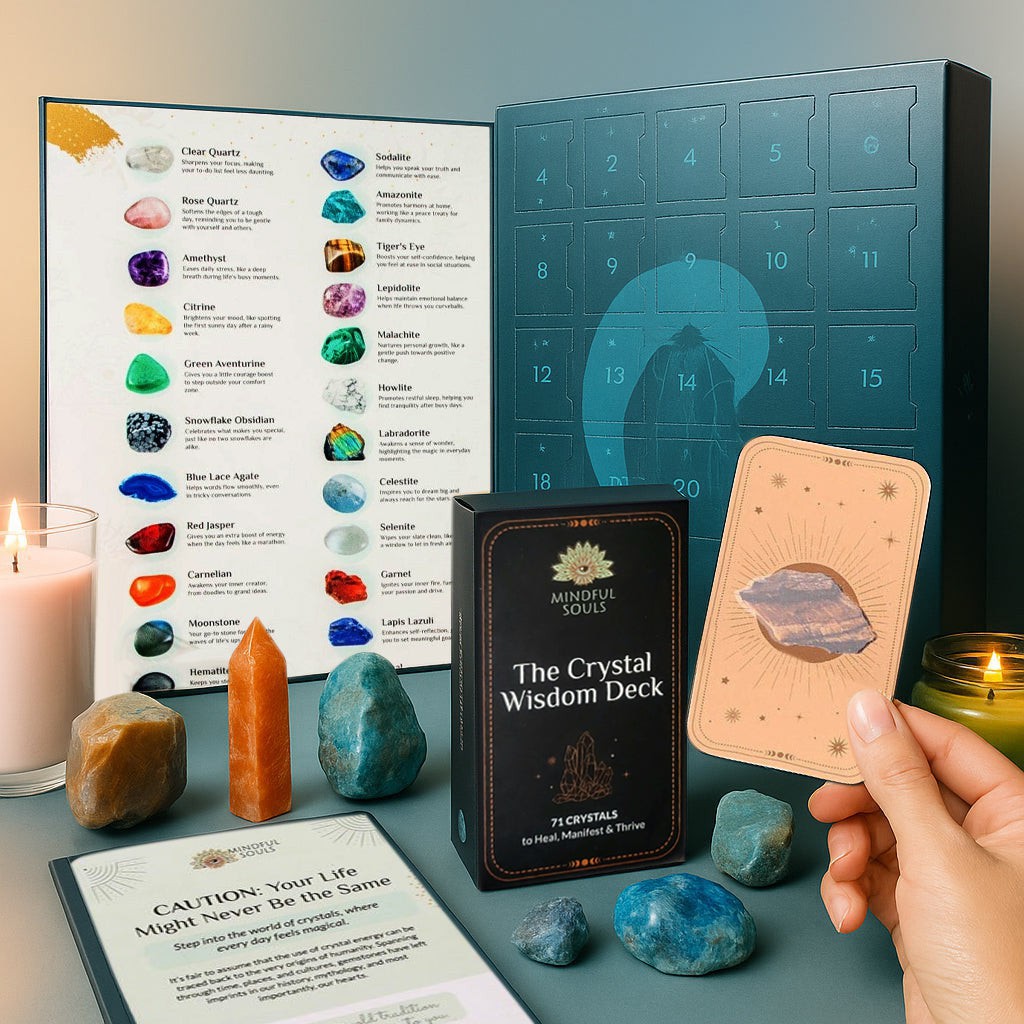
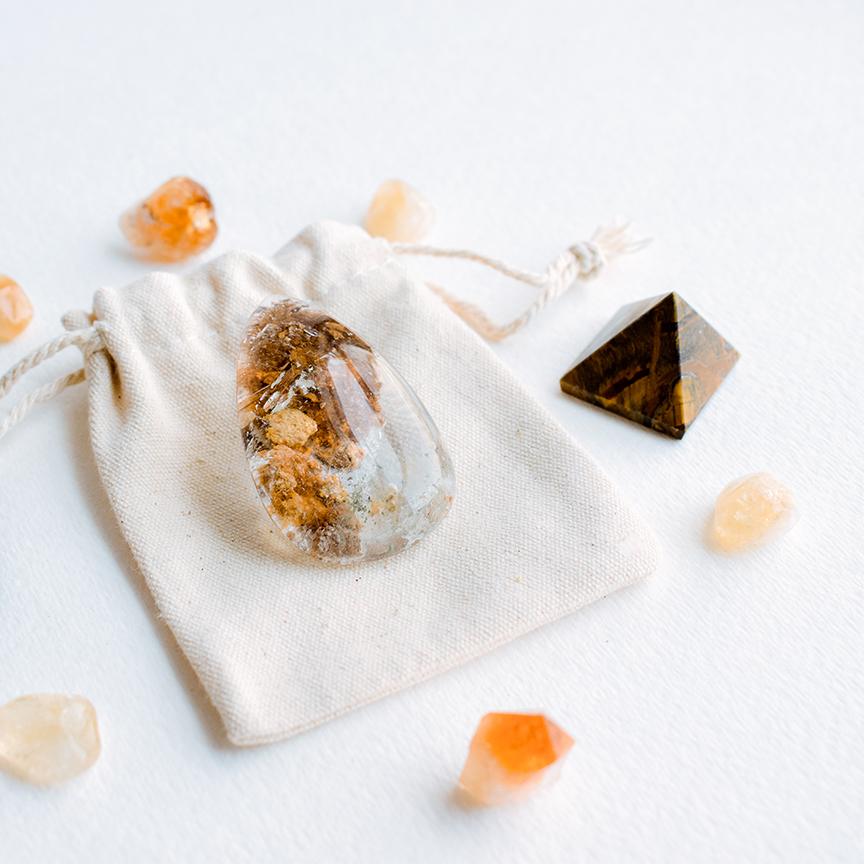
A crystal advent calendar is a Christmas countdown calendar where each numbered day holds a natural crystal instead of a sweet or a toy. Alongside the stone you usually find its meaning and a short affirmation, so opening it becomes a moment of intention rather than just a moment of unwrapping.
Why this format has grown so quickly:
- The crystals do not disappear. Unlike chocolate, every stone you open in December is still with you in March.
- Each day carries meaning. The stone comes with its properties explained, so there is something to sit with.
- It works for complete beginners. No prior knowledge is needed, because each day teaches you one stone.
- It doubles as a starter collection. By December 25 you own a balanced set of soothing, protective, uplifting, and grounding crystals.
- It suits the season emotionally. December is the month most people most need grounding.
Crystal advent calendars sit between a self care calendar and a spiritual one, which is exactly why they have taken off with adults.
What Is Inside the Mindful Souls Crystal Advent Calendar
Our 25 Days of Crystal Energy calendar was built for exactly this kind of December.
- 25 natural crystals, each one chosen with care
- A daily affirmation to sit with, not just read
- The meaning and emotional benefit behind every stone
- A balanced mix of soothing, protective, uplifting, and grounding crystals
- Something that stays with you long after the tree comes down
If you want the calendar with a card deck alongside it, the crystal discovery bundle pairs the two together.
Final Thoughts
An advent calendar is a small object that does a surprisingly large job. It takes the most rushed month of the year and gives it a heartbeat: 24 mornings where something gentle happens before the day begins.
That is why the tradition has survived nearly two centuries of change, from chalk lines on a German wall to crystals in a beautifully boxed set. The materials keep changing. The feeling never does.
Choose the calendar that matches the December you actually want. If you want indulgence, choose chocolate. If you want fun, choose toys. If what you are craving is calm, a crystal advent calendar might be exactly it.
Browse our Christmas crystal gifts and early holiday gift picks for the rest of the season's gifting. And if there is a December birthday in your life, our December birthstone guide will point you in the right direction.
Advent Calendar Quick Answers
- An advent calendar counts down to Christmas with one small surprise per day
- Standard dates run December 1 to December 24
- Advent itself starts the fourth Sunday before Christmas, which is November 29 in 2026
- The word Advent comes from the Latin adventus, meaning arrival
- The first printed calendar was made by Gerhard Lang in Munich around 1908
- Opening doors were added in the 1920s
- Chocolate calendars only appeared in the 1950s
- A crystal advent calendar holds one natural stone and one affirmation per day, and lasts past December




























 Mindful Points
 Contact Us


 60 Seconds
 5 Questions


