Your cart is currently empty...
but it doesn't have to be!
We Think You'll Love This


In This Article:
- What Is a Mood Ring?
- How Do Mood Rings Work?
- Mood Ring Color Chart
- The Science Behind Mood Ring Colors
- Mood Ring Temperature Meaning: What Each Colour Actually Measures
- Mood Ring Color Meanings, Color by Color
- Are Mood Rings Accurate?
- Mood Necklaces and Mood Bracelets
- A Short History of the Mood Ring
- How to Choose a Mood Ring
- Are Mood Rings Good Gifts?
- Why Is My Mood Ring Stuck on Black?
- How to Care for a Mood Ring
- Key Takeaways
- Conclusion
What Is a Mood Ring?
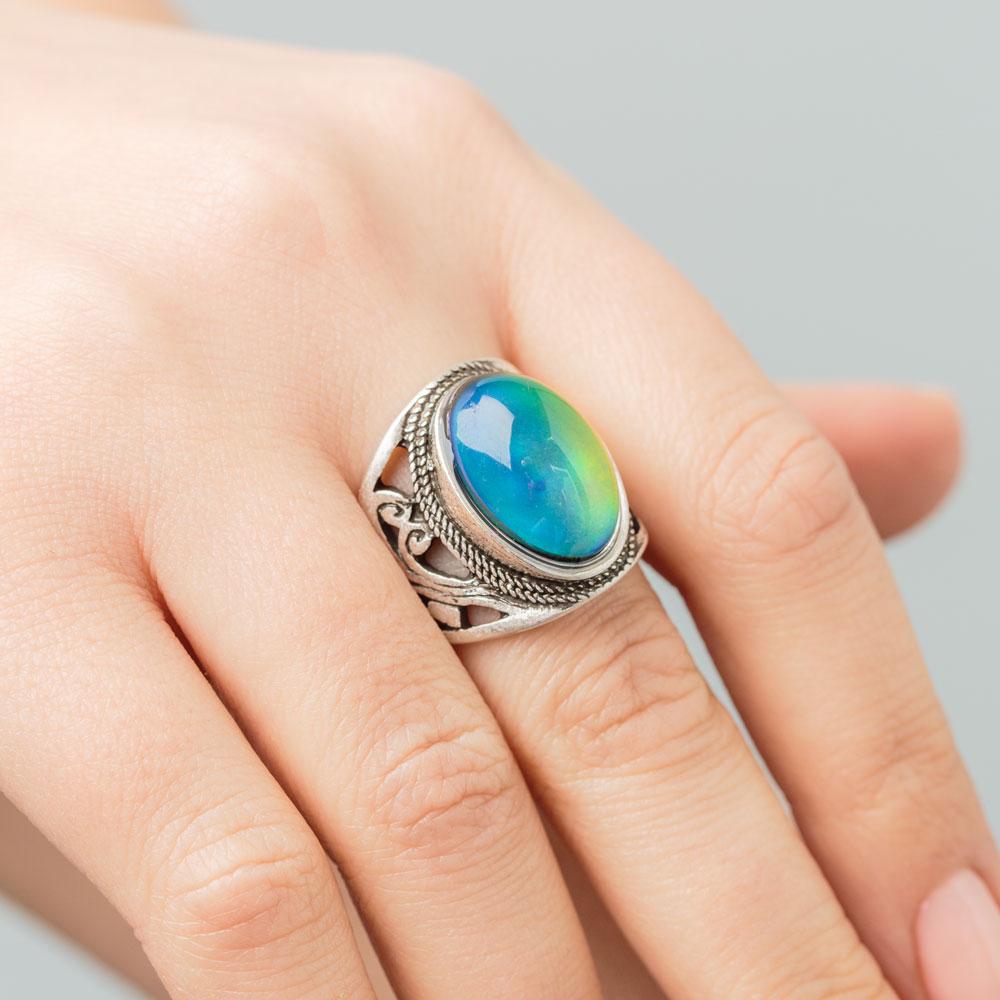
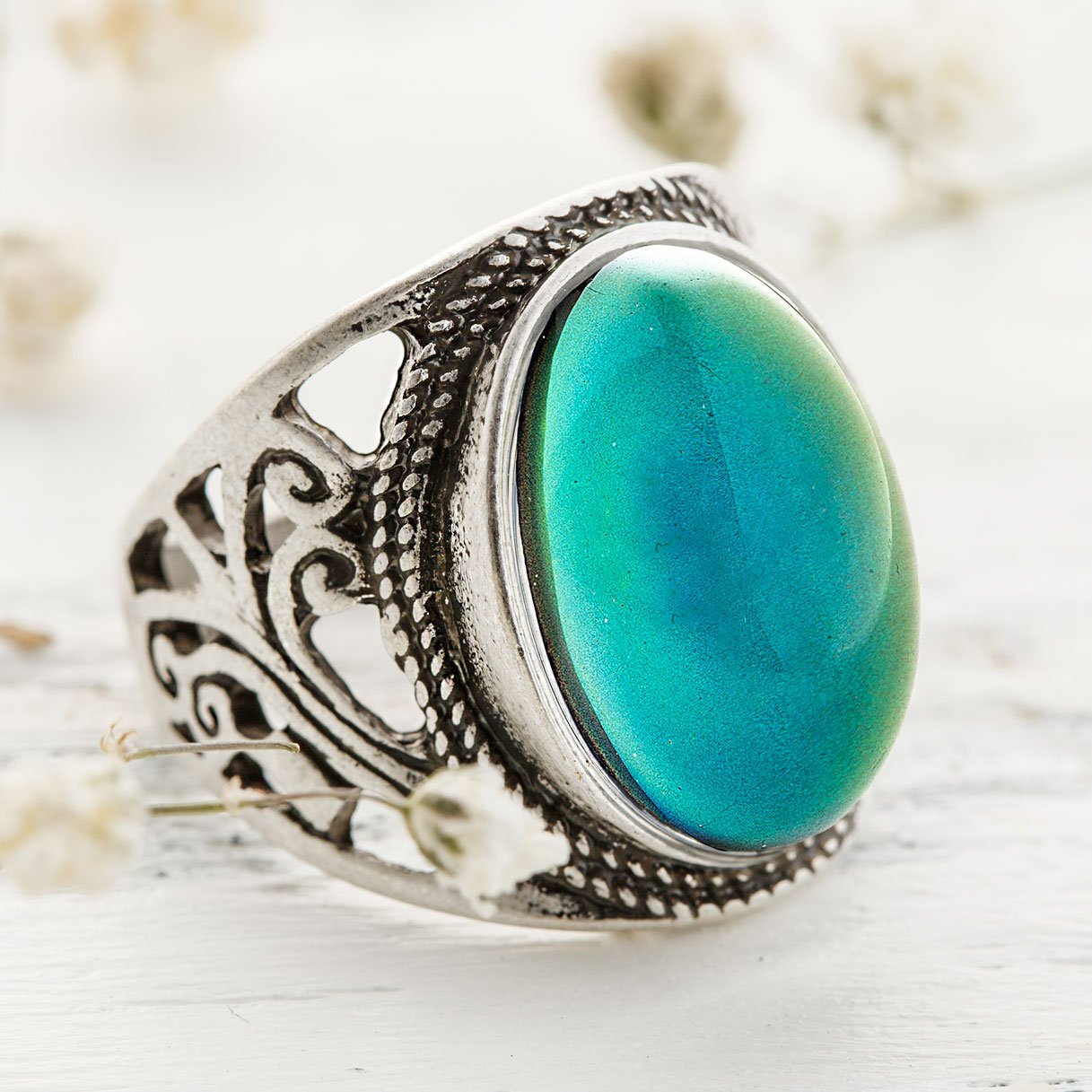
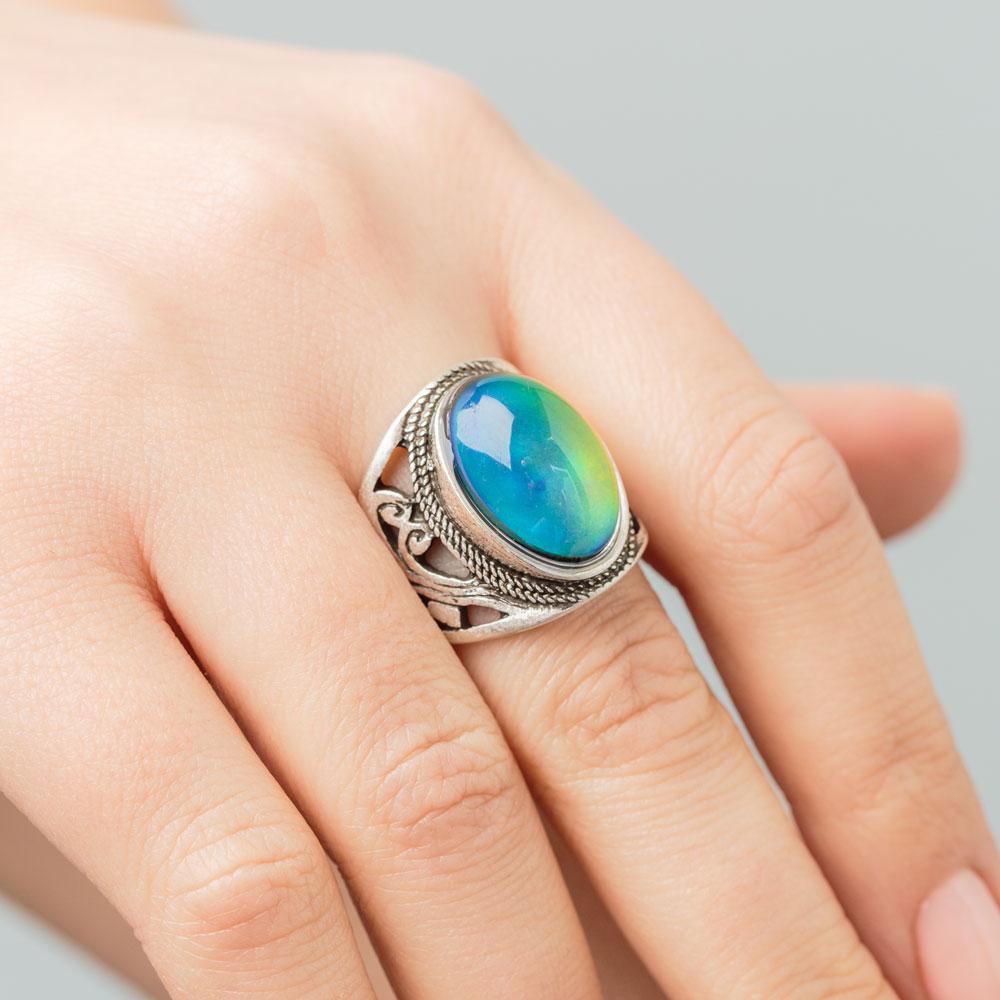
A mood ring is a ring with a stone that changes color as the temperature of your finger changes. The "stone" is usually a clear glass or quartz dome over a layer of thermochromic liquid crystals, which change color with heat. The idea is that your emotions affect blood flow and skin temperature, so the ring gives a playful hint about how you might be feeling.
How Do Mood Rings Work?
Mood rings work because their liquid crystals twist and untwist as temperature changes, which changes the color of light they reflect.
- Heat reaches the crystals. Your finger warms the ring from the inside, while the air cools it from the outside.
- The crystal structure shifts. Thermochromic liquid crystals are arranged in a spiral. Warmth tightens the spiral, cold loosens it.
- A new color appears. A tighter spiral reflects shorter wavelengths like blue and violet. A looser spiral reflects longer ones like yellow and amber. When the crystals are too cold to reflect color, the dark backing shows through as black.
Why emotions can shift the color: when you are relaxed, blood flows freely to your hands and they warm up. When you are stressed or cold, blood vessels in your hands tighten and your fingers cool. That is the link between mood and color.
Mood Ring Color Chart
This mood ring chart shows the typical temperature for each color and its traditional meaning. Every brand's crystals are tuned a little differently, so treat the temperatures as a guide.

The Science Behind Mood Ring Colors
A mood ring consists of bright colors that are heat-activated elements based on thermotropic science
(the study of materials that change properties with temperature). The mood ring changes color as a response to the skin temperature of any human being at any given time. Big temperature fluctuations produce big changes in color and therefore account for the mood ring full color spectrum. Wearing a mood ring is much like wearing a liquid crystal thermometer on a finger.
The rings are made with a special thermochromic material, which is used in the change of geometrical molecules due to temperature change. This physical action of a change in molecular geometry changes the capability of the crystal to absorb light and then reflect it, changing the color of the ring from one side of the color spectrum to the other in which the crystals are embedded.
Mood ring colors are based on a simple principle: not directly to the emotions of the wearer but to changes provoked in skin temperature. A mood ring reacts with a change in color because of heat energy; it changes color with temperature change. For instance, if somebody is becoming anxious or tense, the body temperature may be elevated, and this will, in turn, make the mood ring change color to warmer colors of orange or red. Conversely, a calm and relaxed state might lower the body temperature, resulting in cooler colors like blue or green.
Now, although the scientific basis of mood rings lies at the center of temperature sensitivity and not emotional detection, the colors carry specific emotional states with them.
Mood Ring Temperature Meaning: What Each Colour Actually Measures
Here is the part most mood ring guides leave out. Every colour on the ring corresponds to a rough skin temperature, and once you know the numbers the whole thing makes more sense.
Calibration varies between manufacturers, so treat these as approximate rather than exact.
| Colour | Approx. Skin Temp | What Is Happening |
|---|---|---|
| Black | Below 25°C / 77°F | Cold hands, or the ring is not being worn. |
| Brown / Amber | Around 26°C / 79°F | Cool. Often just a cold room. |
| Yellow | Around 27°C / 81°F | Slightly below resting temperature. |
| Green | Around 28°C / 82°F | Typical resting skin temperature. |
| Blue-Green | Around 29°C / 84°F | Warm and settled. |
| Blue | Around 30°C / 86°F | Comfortably warm. |
| Dark Blue / Violet | 31°C+ / 88°F+ | Warmest end of the scale. |
Why most rings sit green to blue most of the time. Resting finger temperature for most people falls between 28 and 32 degrees Celsius. That is the middle of the scale by design, which is what gives the ring room to move in both directions.
Why the room matters as much as you do. A cold office will pull the ring toward amber regardless of how you feel. If you want a fair reading, give it a few minutes on your finger indoors first.
Mood Ring Color Meanings, Color by Color
Dark Blue or Violet
A dark blue mood ring traditionally means happiness, romance or passion. It is the warmest color on most rings and shows up when your hands are very warm, often when you feel joyful or excited.
Blue
A blue mood ring means calm, relaxed and at peace. Blue is the color most people hope to see. It usually appears when you are resting comfortably in a warm room.
Blue Green (Teal)
Blue green means settled and content. You are relaxed but alert, somewhere between calm blue and neutral green.
Green
A green mood ring means balanced or neutral. It is the "resting" color for many people, showing an average skin temperature and an even state of mind. Green is also the color of the heart chakra, linked with love and harmony.
Yellow and Amber
Yellow or amber means unsettled, nervous or distracted. Your hands are cooling a little, which can happen with mild stress, or just a chilly room.
Orange
An orange mood ring usually means restless energy, motivation or mixed feelings. Not every ring shows orange, but when it does it sits between amber and red tones.
Brown
A brown mood ring means anxious, uneasy or tired. It usually appears as your hands cool further, just before the stone turns gray or black.
Gray
Gray means nervous, uncomfortable or anxious. It is often a quick passing color on the way to black.
Black
A black mood ring traditionally means stress or tension, but most of the time it means the ring is cold. Black also shows when the ring is not being worn, when your hands are cold, or when the crystals are damaged. See why a mood ring gets stuck on black below.
Purple
A purple mood ring means romance, passion or intense focus. Some rings show purple instead of dark blue at the warmest temperatures.
Pink
A pink mood ring means affection, love and warmth. In crystal traditions pink is tied to the heart chakra. Explore our heart chakra crystals, or take our chakra quiz to find which energy center needs care.
Red
A red mood ring means energy, excitement or strong emotion. Red is less common and depends on the ring's design.
White
A white mood ring usually means confusion, boredom or a frazzled mind. On many rings white or clear actually means the crystals are worn out.
Are Mood Rings Accurate?
Mood rings are accurate at showing temperature, and only loosely accurate at showing emotion. Stress and calm really do change the temperature of your hands, so the color can hint at your mood. But a cold drink, washing your hands, air conditioning or a sunny window can change the color just as easily.
So are mood rings real? Yes, they are real temperature sensitive jewelry. Do mood rings work as emotion readers? Only indirectly. The best way to use one is as a playful prompt: when the color changes, pause and notice how you feel.

| Color | Mood Ring Color Meanings Detailed Explanation |
| White | The color white usually symbolizes positive things like harmony, and peace. However, a white mood ring could also reflect boredom, confusion, or frustration. |
| Gray | This color symbolizes discomfort or anxiety. The more aggravated you feel, the darker this shade of gray gets until it eventually turns black. |
| Black | It is the default color of any mood jewelry when it is not in use. However, if your mood ring turns black when you’re wearing it, it could mean you might be experiencing some negative emotions, like stress, anxiety, or anger. |
| Red | In general, red is the universal color of love and passion. That’s the case with mood jewelry as well. A darker shade of red can mean quite a few different emotions, starting from romantic love and arousal and ending with fear or anger. |
| Brown | Brown on a mood ring suggests feelings of tension, stress, worry, or unease, hinting a state of frustration or nervous anticipation. |
| Gold | A gold hue on your mood ring signifies positive vibes, often linked to joy, empowerment, optimism, clarity, energy, and concentration. It reflects a state of happiness and hopeful ambition. |
| Orange | Orange can indicate a wide variety of emotions. The ring could display different shades of orange when its wearer feels angry, stressed out, upset, brave, nervous, or even confused. |
| Yellow | This color is the epitome of mixed emotions. The wearer might feel poetic one second and completely confused or nervous the other. Usually, it indicates that the mind has a hard time focusing. |
| Pink | A rare mood ring color, deeply connected to the Heart Chakra. It symbolizes warmth, affection, understanding, thankfulness, and a sense of universal bond. |
| Green | The individual is experiencing a sense of normalcy, with an average emotional state that indicates neither significant stress not intense excitement—a state of moderate equilibrium. |
| Blue-Green | This indicates a sense of satisfaction and tranquility. The individual is awake yet at ease and feeling quite reflective. |
| Light Blue | Light blue indicates a state of optimal relaxation, and is caused by a comfortable neutral temperature. It symbolizes calmness and tranquility. |
| Blue | A regular blue shade can showcase a person’s happiness, thriving optimism, and peaceful state of mind. |
| Dark Blue | Dark blue anticipates a sense of excitement, passion and impulsive romance. |
| Indigo |
This color is tied to sensuality. It can mean that the wearer is head over heels for someone or even consumed by strong passion. |
| Purple | Purple is connected to purpose and clarity. The wearer is confident on what they want and ready to go for it. |
With all these mood ring color meanings, even the slightest hue variation can give you a different perspective of your ring, feelings, and emotions! Feel free to use this mood ring chart for any mood jewelry---be it a necklace, bracelet, or anything else. The color is the key!
Mood Necklaces and Mood Bracelets
Mood necklaces and mood bracelets use the same heat sensitive crystals as mood rings, so the colors mean the same thing. They usually show slightly cooler colors, because a pendant or bead sits away from warm fingertips and closer to the air.
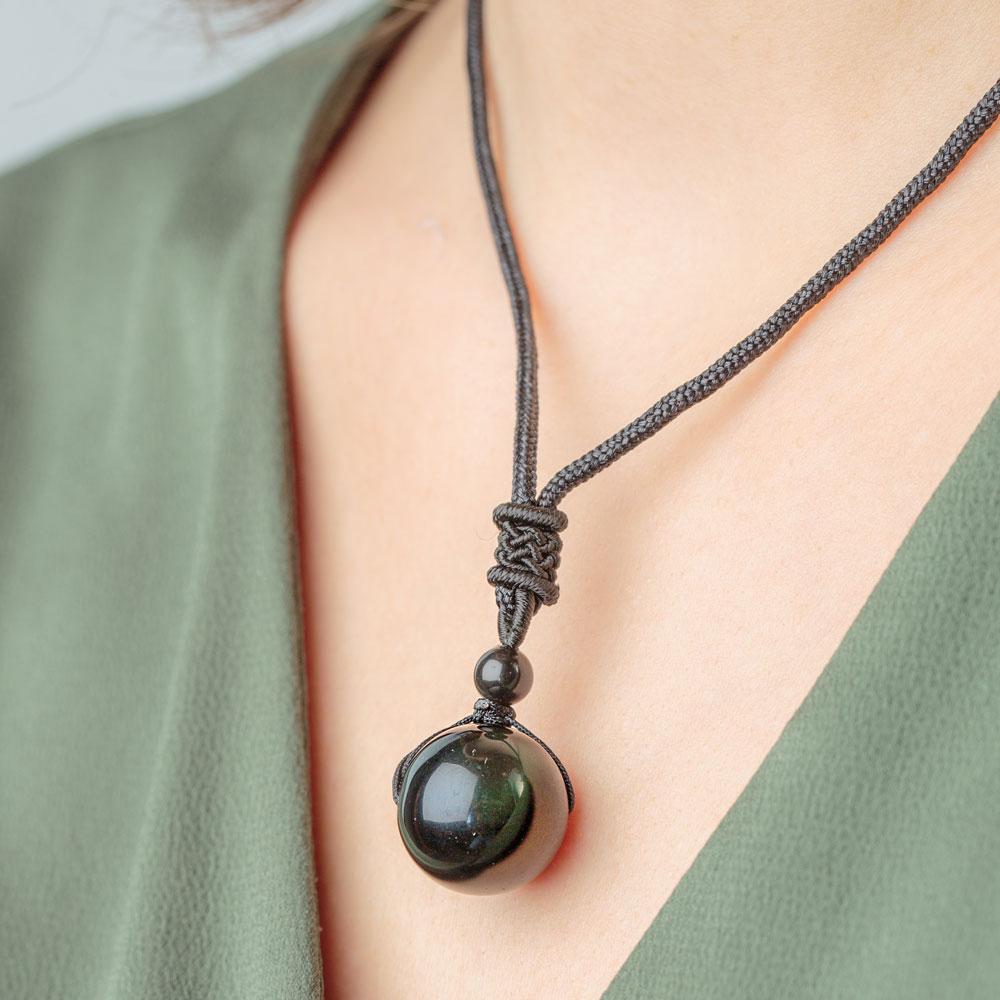
- Mood necklace colors follow the same chart, but expect more green and amber since the pendant hangs away from the skin. Pair one with our necklaces.
- Mood bracelet colors change quickly because the beads are small. Stack one with our spiritual bracelets.
A Short History of the Mood Ring
The mood ring was invented in 1975 in New York by Josh Reynolds and Maris Ambats. It became one of the biggest fashion fads of the 1970s, selling millions of rings in its first years.
Vintage vs modern mood rings: original 1970s mood rings used hollow glass or quartz shells with liquid crystals sealed inside. Moisture slowly leaked in, which is why most vintage mood rings are now permanently black. Modern rings use a thin thermochromic film under a sealed dome, so they are more reliable and last longer.
How to Choose a Mood Ring
Choose a mood ring by fit, metal, stone shape and how you plan to wear it.
- Fit: an adjustable mood ring fits most fingers and is the easiest gift. A snug fit also gives better color changes, because the ring stays close to your skin.
- Metal: a sterling silver mood ring lasts longer and is kinder to sensitive skin than plated brass, which can tarnish or leave a green mark.
- Stone shape: oval and round stones show the color clearly. Larger stones show more color shifts.
- Style: simple bands suit everyday wear, while vintage style, animal and heart designs make fun statement pieces.
- Seal quality: look for a smooth, well sealed dome. That is what keeps water out and the colors working.
Shop Mood Rings by Style
- Adjustable mood rings: easy gifts with no ring size needed. See our mood rings collection.
- Sterling silver mood rings: best for daily wear.
- Vintage style mood rings: a nod to the 1970s original.
- Crystal rings: prefer a stone that means something all the time? Browse our crystal rings, including an adjustable natural gemstone ring and a wire wrapped rough crystal ring.
Are Mood Rings Good Gifts?
Yes, mood rings make fun, affordable and meaningful gifts. They suit almost every age, need no exact ring size when adjustable, and come with a built in conversation: "What color are you today?"
- Stocking stuffers: a classic holiday surprise. See our stocking stuffers.
- Friendship gifts: matching mood rings for best friends.
- Birthday gifts: pair a mood ring with a crystal in their favorite color. Browse birthday gifts.
- Budget gifts: find more ideas in our gifts under $40 and our list of spiritual gifts under $50 for every zodiac sign.

Why Is My Mood Ring Stuck on Black?
A mood ring stuck on black is usually cold, water damaged or worn out.
- Water damage: the most common cause. Once water gets under the dome, the crystals stop working for good.
- Old crystals: thermochromic crystals fade over time, often after a year or two of daily wear.
- Cold hands or a cold room: warm the ring in your palm for a minute and check again.
- Loose fit: if the ring does not touch your skin, it will not warm up.
If warming it does not help, the crystals are most likely damaged and cannot be fixed.
How to Care for a Mood Ring
- Keep it dry. Take it off before washing your hands, showering, swimming or cleaning.
- Avoid sunlight and heat. Store it away from windows, cars and radiators.
- Skip chemicals. No lotions, perfume or jewelry cleaners on the stone.
- Clean gently. Wipe with a dry, soft cloth.
- Store it on its own. A small pouch prevents scratches on the dome.
Key Takeaways
- Mood ring color meanings run from dark blue (happy) to blue (calm), green (balanced), amber (nervous) and black (stressed or cold).
- Mood rings use thermochromic liquid crystals that react to skin temperature.
- They are accurate for temperature, only loosely for emotion.
- A ring stuck on black is usually cold, water damaged or worn out.
- Keep it dry and out of the sun to make it last.
- Choose adjustable and sterling silver styles for easy gifts and daily wear.
Conclusion
Mood rings are part science, part fun and part mindful moment. They will not read your mind, but they give you a colorful reason to pause and notice how you feel. Now that you know what every color means, pick the one that fits your style, or surprise someone with theirs.
Find your favorite in our mood rings collection.















 Mindful Points
 Wishlist
 Contact Us


 60 Seconds
 5 Questions


Can’t wait to receive one as an adult
I wear a mood ring and I experience a lot of different colors
You should be a part of a contest for one of the highest quality websites online. I am going to recommend this web site!
I recently got a mood ring. I noticed it stayed green most of the day, even now. However, if I moved around, brown would come in like a spot in the green. I had bad back pain yesterday. Is the pain causing the spot? Once I sat for about 5 minutes, it went green again. I just never heard of such!
I love my Moodring and I do get a variety of colours. I have had the stunning pink and it is accurate.