Your cart is currently empty...
but it doesn't have to be!
We Think You'll Love This


In This Article:
- What Is Memorial Day Really About?
- The Difference Between Memorial Day and Veterans Day
- How People Traditionally Observe Memorial Day
- A Gentle Memorial Day Remembrance Ritual
- The Best Crystals for Remembrance, Peace, And Healing
- Find Your Memorial Day Crystal
- Three Smaller Rituals to Try on Memorial Day
- The Memorial Day Candle Ritual
- Why Self-Care Is So Important on Memorial Day
- Why Memorial Day Truly Matters
What Is Memorial Day Really About?
Memorial Day is a U.S. federal holiday observed on the last Monday of May each year. For many its a reason to fire up the grill, gather with friends, and unofficially kick off the summer.
There’s nothing wrong with that. But underneath the barbeques, sales, and sunshine, it is a deeply meaningful holiday.
Memorial Day is connected to remembrance; it is a day of deep gratitude, grief, and respect. And while this is widely recognized, many don’t know its exact history and meaning.
So before we dive into Memorial Day rituals, let's explore where and why this holiday began.
The History of Memorial Day
Memorial Day is a day set aside to honor and mourn the military personnel who died while serving in the United States Armed Forces.
According to the US Department of Veterans Affairs, Memorial Day dates back to the aftermath of the Civil War, one of the deadliest conflicts in American history. Communities across the country began decorating the graves of fallen soldiers with flowers as early as 1865. By 1868, General John A. Logan officially declared May 30th as "Decoration Day," calling for Americans to place flowers on the graves of soldiers who had died during the war.
After World War I, the holiday expanded to honor all American military deaths, not just those from the Civil War. In 1971, Congress declared Memorial Day a national holiday and moved it to the last Monday of May.

The Difference Between Memorial Day and Veterans Day
Memorial Day and Veterans Day are often confused or simply both seen as a ‘military appreciation day.’ But these two holidays serve very different purposes, and each has its own unique importance.
Memorial Day
Purpose: To honor those who died while serving in the military. It is a day of mourning and remembrance.
When Is it Observed: The last Monday of May
Veterans Day
Purpose: Honors all military veterans, living and deceased, for their service to the country.
When Is it Observed: November 11th.
How People Traditionally Observe Memorial Day
There is no single "right" way to observe this day. People across the country mark it in different ways, but some of the most common traditions include:
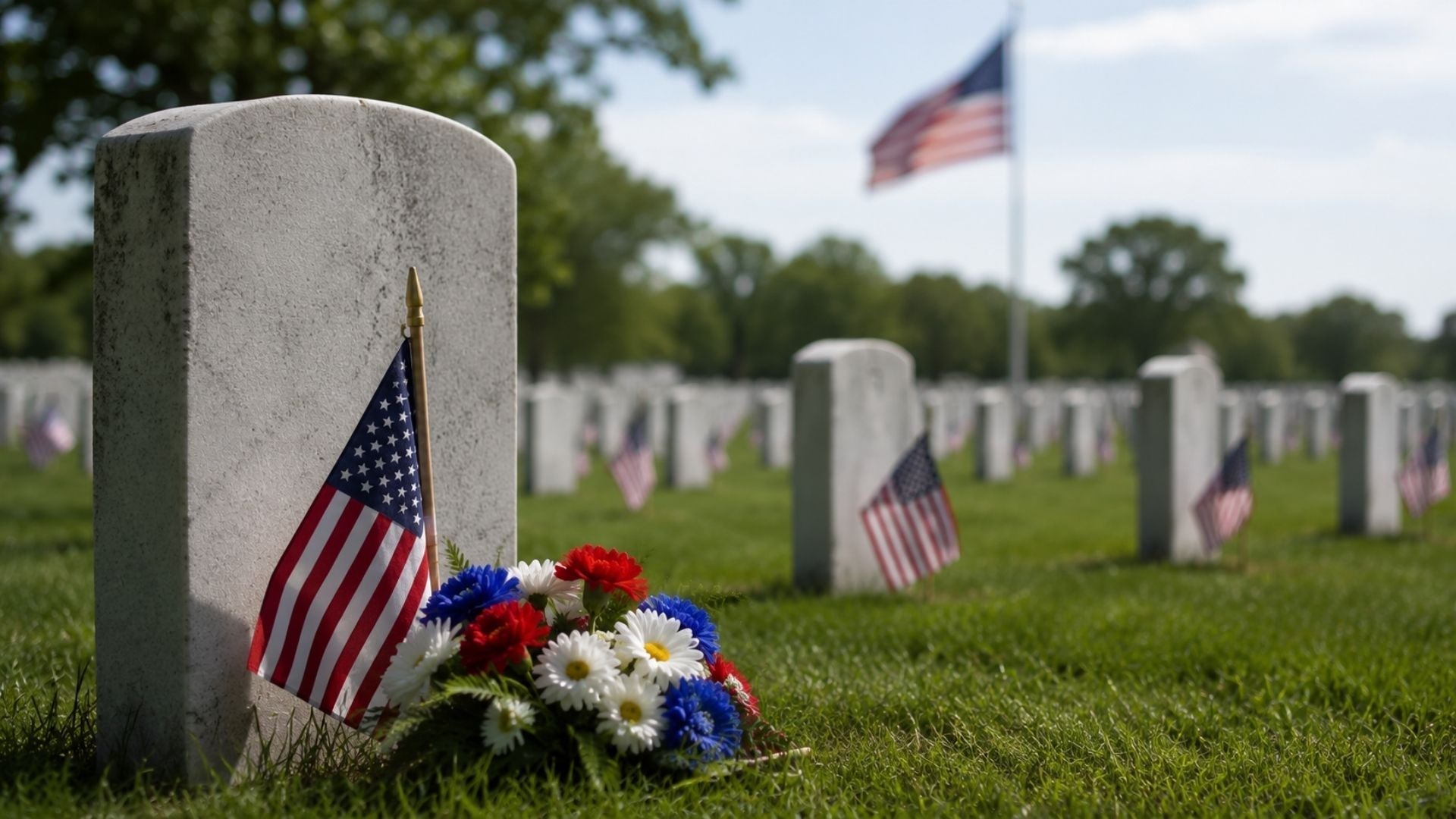
- Visiting cemeteries and placing flowers or flags on graves
- The National Moment of Remembrance: At 3:00 PM local time, the whole country observes a minute of silence.
- Attending memorial ceremonies or parades in their community
- Flying flags at half-staff until noon, then raised to full-staff for the rest of the day
- Wearing Red Poppies: According to The Imperial War Museum, poppies are a globally recognized symbol of remembrance. While their history dates back to the First World War, today they are worn as a sign of respect and remembrance for soldiers who died in service to their country across the UK and the U.S.
- Gathering with family to share stories and remember loved ones
- Donating to veteran support organizations
A Gentle Memorial Day Remembrance Ritual
Building a remembrance altar is one of the most ancient and universal ways humans have honored the dead. And it doesn't have to be complicated, expensive, or perfect.
Think of it as a small, intentional ritual that creates space to hold the memory of someone you love. You build it once in the morning, set your intention, and let it be present with you throughout the whole day.
What To Use
- A candle (white for peace, red for honor, either is beautiful)
- A photo of the person or people you're remembering
- Flowers: Red Poppies are a traditional symbol of remembrance, but any flowers work.
- One or two crystals (It’s best to use Rose Quartz in a remembrance ritual)
- A handwritten note, something you'd want them to know
- One meaningful object: a medal, a coin, a piece of their jewelry, anything that carries their energy
If you don’t have all of these, that’s okay. A candle and a photo are already a complete altar and can be just as meaningful.
Step 1: Choose Your Spot
Find a small surface that feels right: a shelf, a windowsill, a corner of your dining table.
Step 2: Place Each Item With Care
Set your photo at the center. Place your candle nearby. Arrange crystals, flowers, and any meaningful objects around them. As you place each item, pause for a second. Think of the person it represents. Let yourself feel the connection, even briefly.
Step 3: Set Your Intention Out Loud
Once your altar is ready, stand or sit in front of it. Take one slow breath and light the candle.
Then say your intention for it. Something simple, like:
"Today I honor [name]. I hold you in love and gratitude. May your memory be a blessing."
Step 4: Let It Stay Up All Day
Let burning for as long as you’d like (while you’re home, of course). Leave the altar up all day and return to it as often as you want to, or simply let it hold space.
Each time you notice it, let it remind you of the person, the gratitude, and the love that doesn't go away just because someone is gone.

The Best Crystals for Remembrance, Peace, And Healing
Crystals aren't magic. But they are tools, and the right crystal can help you feel more grounded, more open, and more at peace while navigating heavy emotions on Memorial Day
Here are a few you may want to keep close by on this holiday:
Rose Quartz: For Grief and Gentle Healing
Rose Quartz is the stone of unconditional love. It is believed to open the heart, soften grief, and bring a sense of warmth even in sadness.
Amethyst: For Peace and Emotional Balance
Amethyst is often considered the best calming crystal for sleep and stress relief. Traditionally used for peace and spiritual clarity, it's believed to quiet the mind and create space for healing.
Black Tourmaline: For Grounding and Protection
Grief can make you feel a little shaky. Black Tourmaline is believed to anchor your energy, keep you feeling safe in your body, and protect your emotional field.
Selenite: For Spiritual Connection and Clarity
Selenite is often associated with the divine, peace, and connecting with those who have passed. It is believed to carry a high, clear energy, like a bridge between the physical and spiritual world.

Find Your Memorial Day Crystal
-
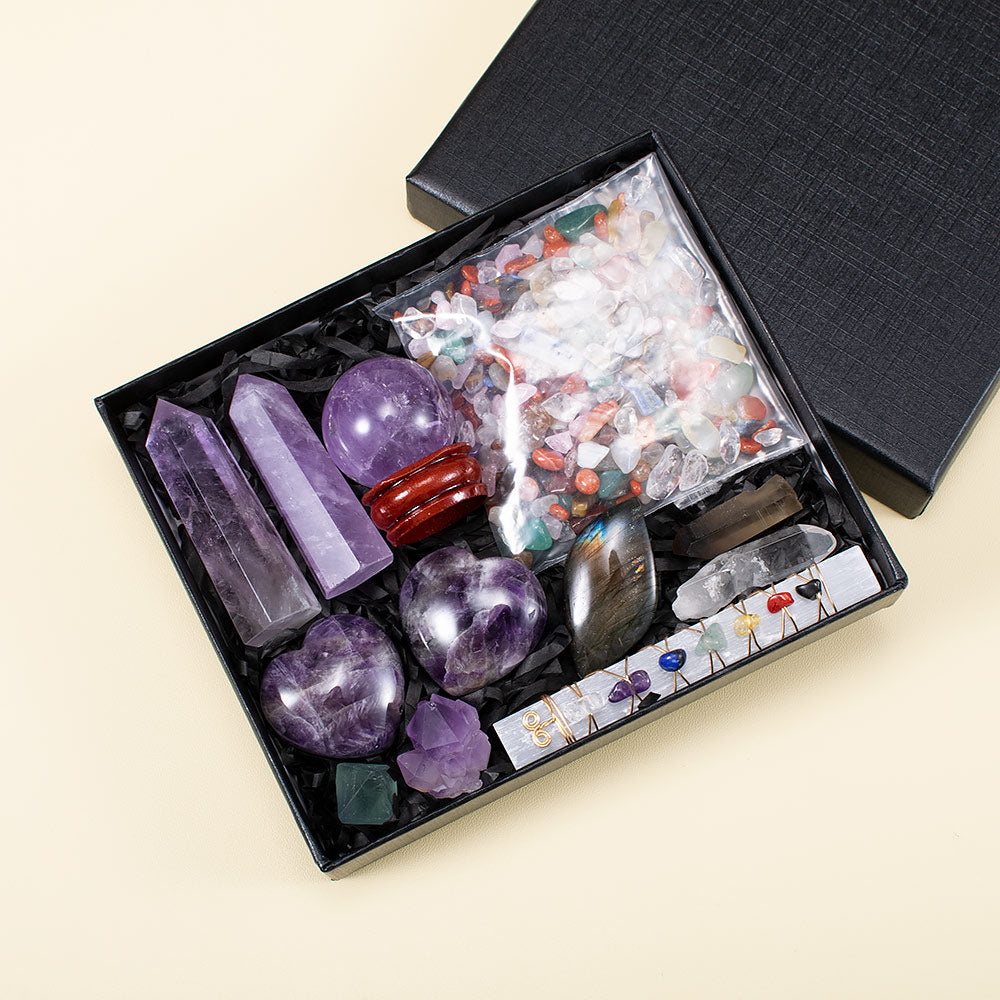
Amethyst Tranquil Energy Crystal Set
A gentle heart-shaped natural Rose Quartz to hold close during difficult times. Believed to bring emotional comfort and healing.
SHOP NOW -
Selenite Sticks
Amethyst Tranquil Energy Crystal Set Our most-loved calming, peace-bringing. Ideal for any Memorial Day remembrance space or meditation rituals.
SHOP NOW -
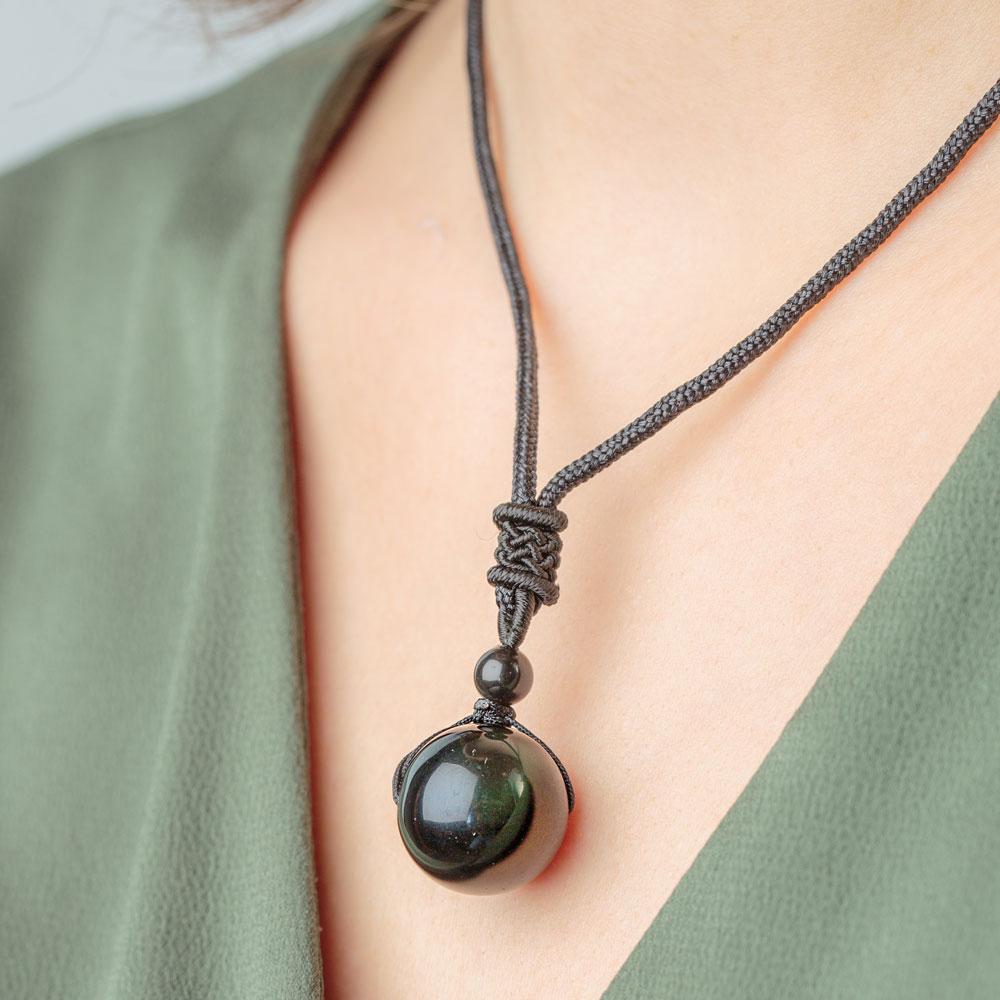
Raw Black Tourmaline Pendant – Protection Stone
Prized for their natural moon-like glow, these natural Selenite sticks are great for clearing heavy energy, enhancing spiritual connection, and promoting peace.
SHOP NOW


Three Smaller Rituals to Try on Memorial Day
Your altar is your anchor. But Memorial Day is a full day, and there are a few other practices that can deepen the experience.
You don't have to do all of these, or any of them, if you don’t want to. Just pick one that speaks to you, or try a different one each year.
The Memorial Day Meditation
Time needed: 10–15 minutes | Best for: Mid-morning or early afternoon
Meditation on Memorial Day isn't about emptying your mind. It's about giving your emotions somewhere to go.
How to do it:
- Find a quiet spot and sit comfortably. Hold a crystal if you have one: Rose Quartz for grief and love, Amethyst for peace and calm.
- Close your eyes and take three slow, deep breaths.
- Bring the person you're honoring to mind. Picture their face, their voice, a memory. Don't force it, just let them arrive.
- Sit with them for 3 minutes and just let whatever feelings come move through you: grief, gratitude, love. They can all be here at once.
- When you're ready, place a hand over your heart and thank your loved one for who they were, what they sacrificed, and the light they brought to your life.
- Open your eyes slowly. Sit for a moment if you need to.
The Memorial Day Reflection
Time needed: 10–20 minutes | Best for: Any time: morning, afternoon, or evening
How to do it:
1. Find a comfortable spot with your journal or just a piece of paper.
2. Follow these prompts and write your answers:
- A memory of [name] I want to hold onto…
- Something I never got to say to them is…
- A quality of theirs I want to carry with me is…
- What I want them to know today is…
3. Write until you feel done. There's no right length.
4. Read back what you wrote, slowly and without judgment.
5. Close your journal and take three deep breaths
The Memorial Day Candle Ritual
Time needed: 5 minutes | Best for: Ending the day
How to do it:
1. Light your candle slowly and deliberately in the evening.
2. As the flame catches, say the person's name out loud.
3. Watch the flame for a minute or two. If a memory comes, let it. If words come, say them.
4. When you’re ready, blow out the candle and close off the day by saying: “I’m still here and I remember you. I carried you with me today, and always will.”

Why Self-Care Is So Important on Memorial Day
While Memorial Day is about remembrance, it's also about grieving. And grief can take a lot out of you. It can leave you feeling exhausted, not just physically, but mentally and emotionally too.
That’s why Memorial Day self-care is vital. And it's not another thing to add to your to-do list on this day, it's about making sure you don’t feel completely run down by the end of it.
Here’s a few ways to practice self-care on Memorial Day:
- Go outside: Sun and fresh air do more for a grieving nervous system than most things.
- Eat something warm and nourishing: Don't skip meals on emotional days.
- Put your phone down earlier than usual: Give yourself time to wind down.
- Rest without guilt. You showed up for something meaningful today. That takes energy.
Why Memorial Day Truly Matters
Memorial Day means more than just a long weekend and the start of Summer. It’s a powerful tribute to the men and women who gave their lives in service to their country. It’s a chance for the nation to pause, reflect, and honor the ultimate sacrifice made on behalf of freedom.
✅ Observed on the last Monday of May since 1971.
✅ Once called "Decoration Day" for the tradition of laying flowers on soldiers' graves
✅ The Red Poppy is a remembrance symbol deeply tied to Memorial Day.





















 Mindful Points
 Contact Us


 60 Seconds
 5 Questions


